Engineering the Next Step: Why I am Building an AI WhatsApp Chatbot for Workers of India
At one of the recent Workers of India workshops in Mumbai, I noticed a domestic worker trying to make sense of a printed government flyer. She kept squinting at the text and eventually handed it to her younger daughter to read out loud. But just a few minutes later, her phone buzzed. She picked it up, held down a button, and seamlessly recorded a voice note on WhatsApp.
That small moment really stuck with me. It highlighted a massive gap in how we build solutions. If we truly want to empower workers, we have to meet them where they already are.
If you have been following the journey of Workers of India, you know our core mission has always been simple. We want to get the people who help us the respect, security, and access to information they deserve. Through our workshops and booklets, we have reached hundreds of workers and guided them through the e-Shram registration process.
But as the momentum builds, I keep asking myself how we can reach the thousands, or even millions, of workers who simply cannot attend a physical workshop.
For the past couple of months, I have been working on an answer to that exact question. I am currently engineering a multilingual, AI powered WhatsApp chatbot designed to scale the Workers of India initiative.
The vision for this chatbot is to provide real time e-Shram registration guidance and allow informal workers to auto generate bilingual employment contracts. But building this has not just been a technical challenge. It has been a deeply social one.
When you look at the vast population of domestic workers in India, you have to confront a harsh reality. Many of them have not had the privilege of formal education and cannot read or write. You cannot just hand someone a website link or a text heavy app and expect it to solve their problems. If the tool is not built for their specific reality, it is completely useless.
That is why I chose WhatsApp as our platform. It is a technology that has almost universally bridged the digital divide across all demographics in India. But knowing that text alone would still be a barrier for many, I am building in voice to text and voice command features. If a worker cannot type their question about e-Shram benefits, they should be able to simply speak into their phone and receive the guidance they need in their own language.
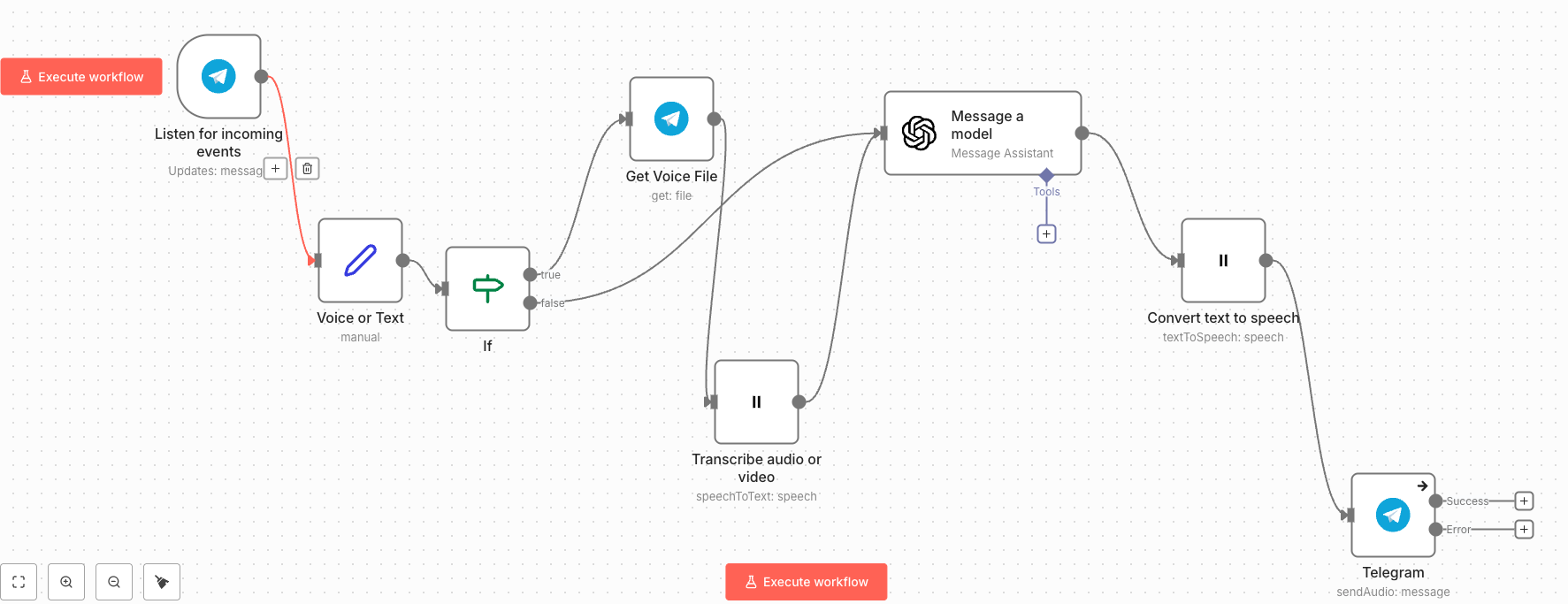
Getting to this point has involved a lot of trial and error. I initially started prototyping the idea using an automation tool called N8N connected to a Telegram account. It was a good first step to see if the logic could actually work. However, I quickly realized that Telegram was not the right platform for the demographic I am trying to reach. To make this truly accessible, it had to be on WhatsApp.
I recently secured a dedicated new phone number for Workers of India to officially start building out this chatbot. I have since transitioned away from my initial prototype and am currently deep into engineering the conversational flows using Voiceflow technology.
There are days when the technical struggles feel overwhelming. Figuring out how to make AI accurately understand different dialects, mapping out complex conversational flows, and ensuring the interface remains as intuitive as possible for someone interacting with AI for the very first time takes a lot of patience.
But whenever I feel stuck on a technical glitch, I think back to that mother at the workshop. I think about the curiosity of the families wanting to secure a better future, and the sheer lack of awareness that stands in their way.
This chatbot is still a work in progress, but the reason I am doing this remains unchanged. Empowerment begins when people have access to the right information in a format they can actually use. With this chatbot, I am hoping to put that information directly into their hands, or rather, their voices.
Stay tuned. The real work is just scaling up.