From Local Workshops to Global Support: Winning the IB Youth Action Fund
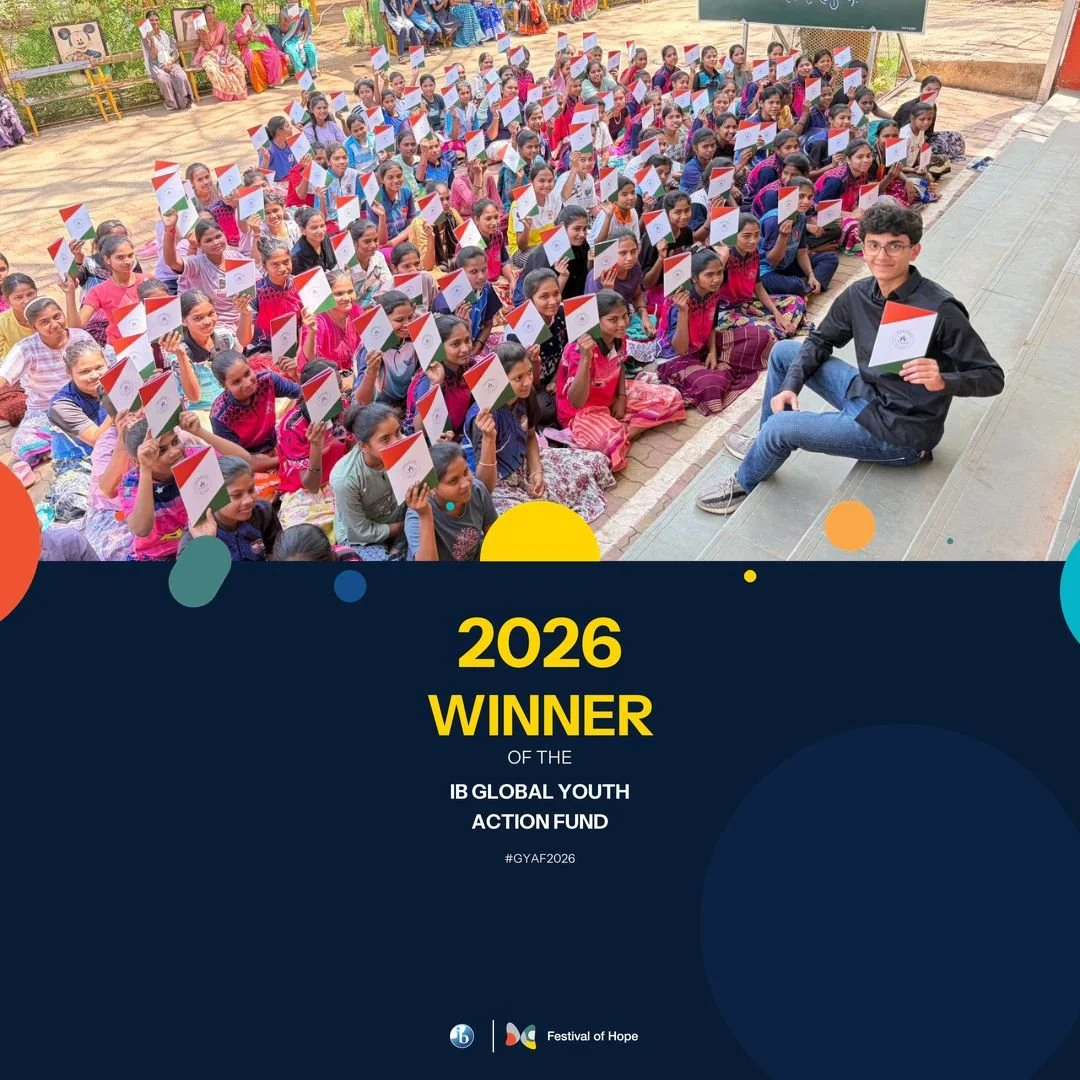
How do you scale a local initiative to reach thousands of workers across India? I am thrilled to share that I have been awarded the 2026 IB Global Youth Action Fund to help fund the next big phase of Workers of India.
When I first started planning the very first workshop for Workers of India, I remember carrying heavy stacks of printed booklets into the community center, feeling incredibly nervous. As a 16 year old, I was unsure if anyone would even show up, let alone take me seriously.
But as the room filled with domestic workers eager to learn about their e-Shram benefits, my doubts quickly faded. The willingness to learn was absolutely there. However, looking at the road ahead, I kept asking myself a recurring question. How do I reach more people and build real tech solutions without a dedicated source of funding?
Today, I am incredibly proud to share an answer to that question. I have been selected as an awardee for the 2026 IB Global Youth Action Fund for my work with Workers of India. This initiative by the International Baccalaureate supports youth led community projects around the world.
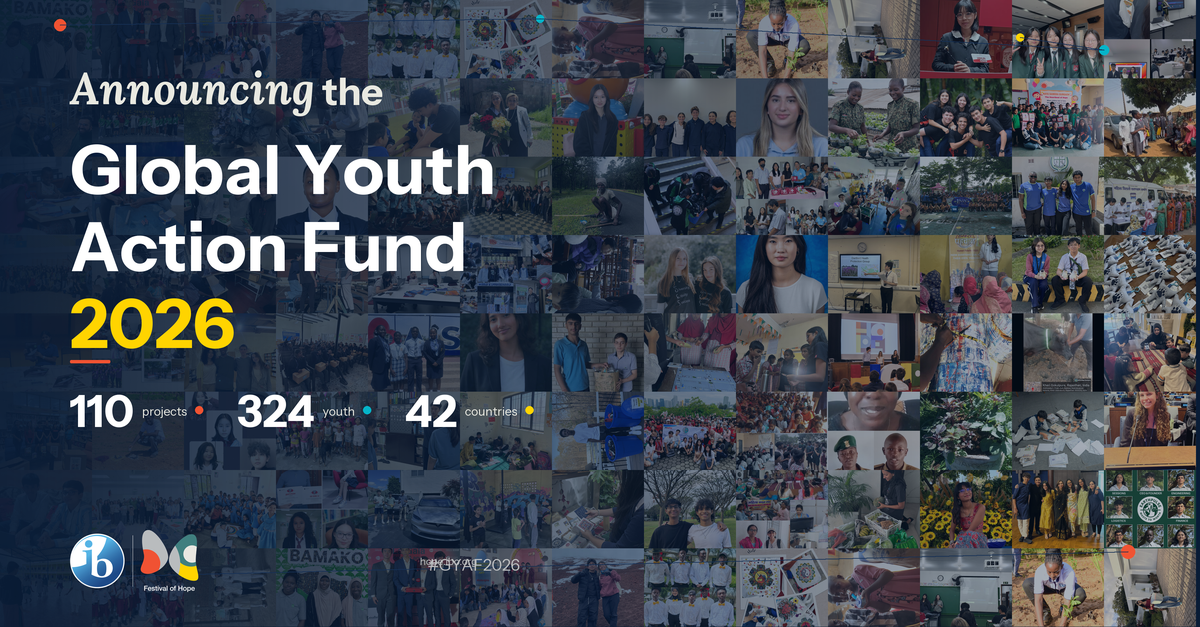
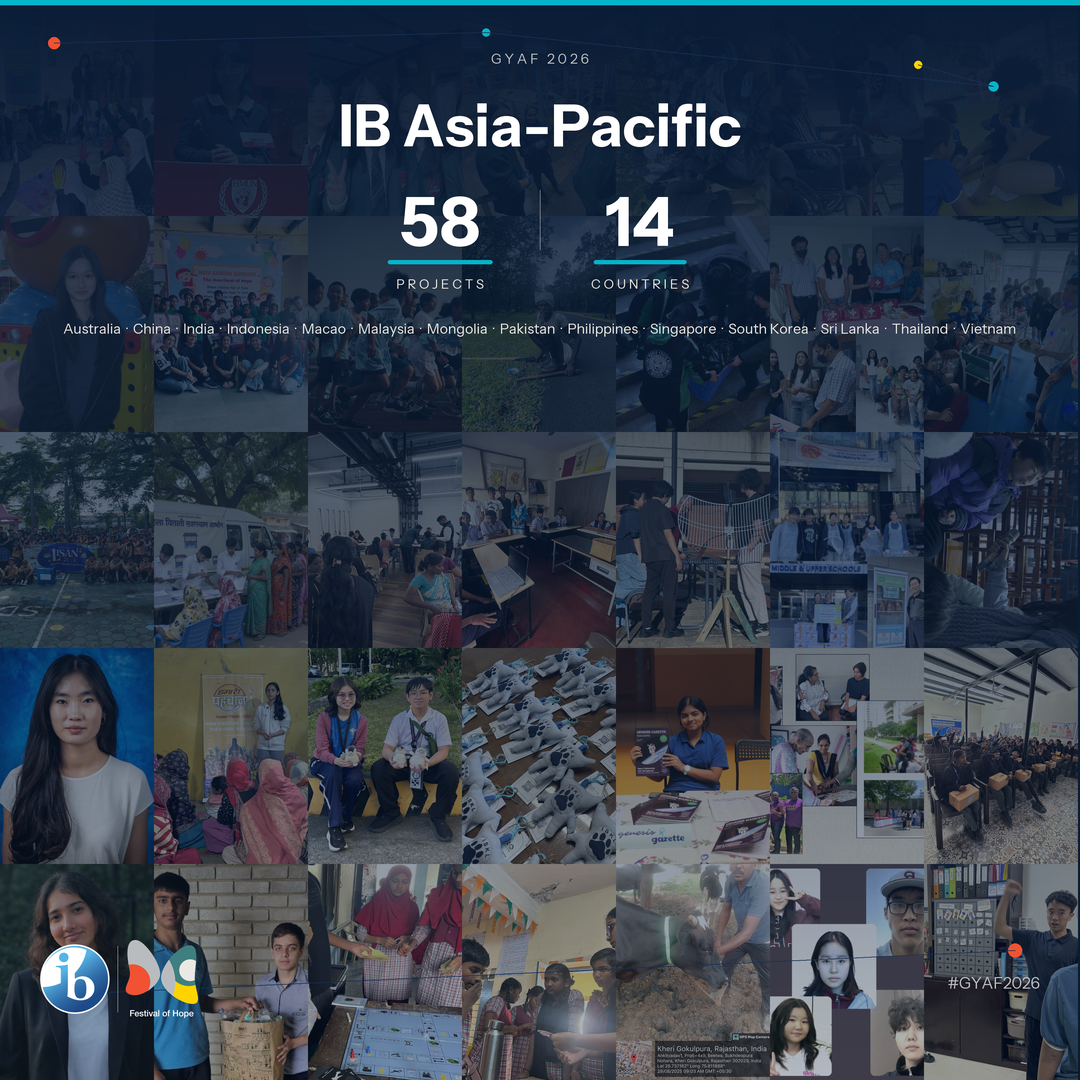
It is truly an honor to be part of this year's cohort. I am standing alongside 110 youth led projects from over 40 different countries. In total, this group represents 324 young people who are all trying to make a difference in their communities. Through this program, Workers of India will receive a grant of up to $3,000 USD and a full year of mentorship, programming, and peer collaboration.
Over the past few months, I have been working on engineering an AI powered WhatsApp chatbot to help informal workers auto generate employment contracts and get real time registration guidance. Building a multilingual tool with voice to text features requires more than just time and technical effort. It requires a financial foundation to run the software, handle the AI processing, and eventually deploy it to the masses.
This grant changes everything. It will directly fund the technology behind the chatbot and help bring my vision for a community mentor network to life. It means I can start looking past the limitations of small local workshops and begin reaching thousands of workers across India who desperately need access to their rights.
I started Workers of India because I saw the stark inequality around me and knew I had to do something about it. The people who help us every single day deserve security and respect. This award is a massive step forward for the cause.
Thank you to everyone who has supported this journey so far. The official announcement went out yesterday on April 10, and I am so excited for the work ahead.
Where do we go from here? I am just getting started.
Engineering the Next Step: Why I am Building an AI WhatsApp Chatbot for Workers of India
How do you empower a domestic worker who cannot read or write but uses WhatsApp every day? I am currently building an AI powered chatbot that uses simple voice commands to help informal workers secure their rights and navigate e-Shram registration.
At one of the recent Workers of India workshops in Mumbai, I noticed a domestic worker trying to make sense of a printed government flyer. She kept squinting at the text and eventually handed it to her younger daughter to read out loud. But just a few minutes later, her phone buzzed. She picked it up, held down a button, and seamlessly recorded a voice note on WhatsApp.
That small moment really stuck with me. It highlighted a massive gap in how we build solutions. If we truly want to empower workers, we have to meet them where they already are.
If you have been following the journey of Workers of India, you know our core mission has always been simple. We want to get the people who help us the respect, security, and access to information they deserve. Through our workshops and booklets, we have reached hundreds of workers and guided them through the e-Shram registration process.
But as the momentum builds, I keep asking myself how we can reach the thousands, or even millions, of workers who simply cannot attend a physical workshop.
For the past couple of months, I have been working on an answer to that exact question. I am currently engineering a multilingual, AI powered WhatsApp chatbot designed to scale the Workers of India initiative.
The vision for this chatbot is to provide real time e-Shram registration guidance and allow informal workers to auto generate bilingual employment contracts. But building this has not just been a technical challenge. It has been a deeply social one.
When you look at the vast population of domestic workers in India, you have to confront a harsh reality. Many of them have not had the privilege of formal education and cannot read or write. You cannot just hand someone a website link or a text heavy app and expect it to solve their problems. If the tool is not built for their specific reality, it is completely useless.
That is why I chose WhatsApp as our platform. It is a technology that has almost universally bridged the digital divide across all demographics in India. But knowing that text alone would still be a barrier for many, I am building in voice to text and voice command features. If a worker cannot type their question about e-Shram benefits, they should be able to simply speak into their phone and receive the guidance they need in their own language.
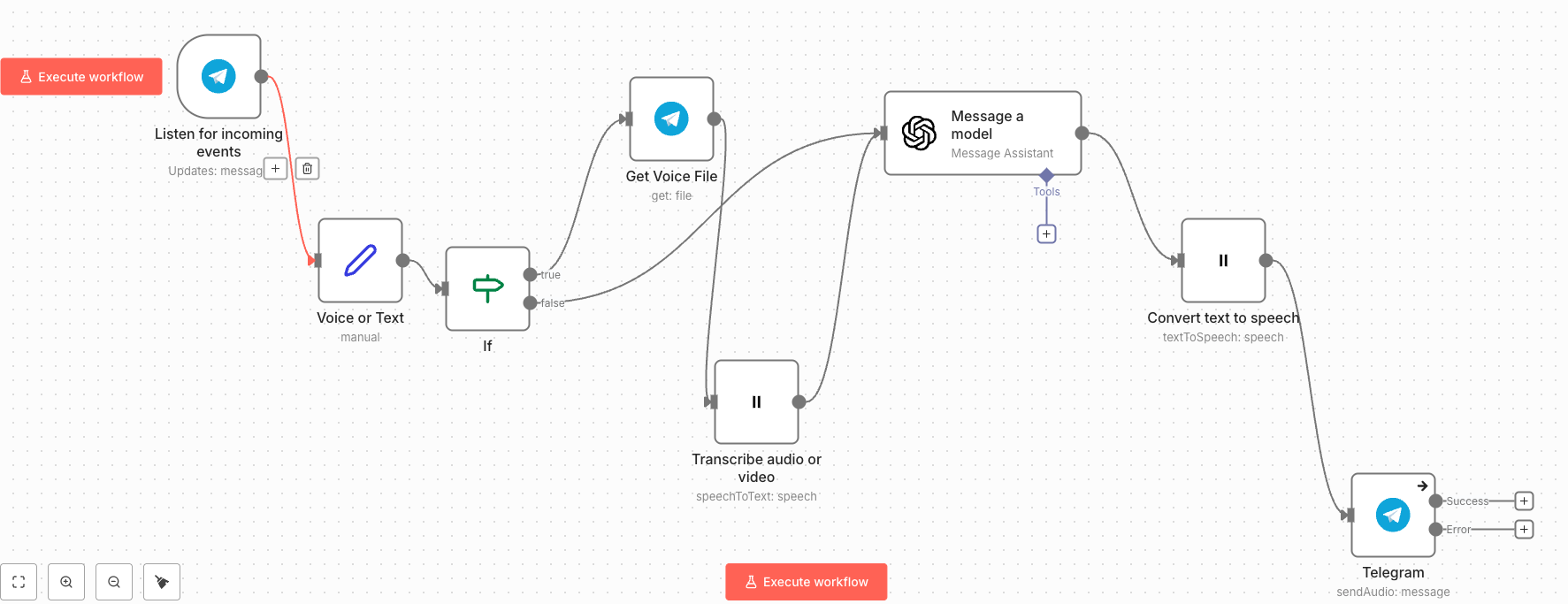
Getting to this point has involved a lot of trial and error. I initially started prototyping the idea using an automation tool called N8N connected to a Telegram account. It was a good first step to see if the logic could actually work. However, I quickly realized that Telegram was not the right platform for the demographic I am trying to reach. To make this truly accessible, it had to be on WhatsApp.
I recently secured a dedicated new phone number for Workers of India to officially start building out this chatbot. I have since transitioned away from my initial prototype and am currently deep into engineering the conversational flows using Voiceflow technology.
There are days when the technical struggles feel overwhelming. Figuring out how to make AI accurately understand different dialects, mapping out complex conversational flows, and ensuring the interface remains as intuitive as possible for someone interacting with AI for the very first time takes a lot of patience.
But whenever I feel stuck on a technical glitch, I think back to that mother at the workshop. I think about the curiosity of the families wanting to secure a better future, and the sheer lack of awareness that stands in their way.
This chatbot is still a work in progress, but the reason I am doing this remains unchanged. Empowerment begins when people have access to the right information in a format they can actually use. With this chatbot, I am hoping to put that information directly into their hands, or rather, their voices.
Stay tuned. The real work is just scaling up.
What 250 Young Girls in Palghar Taught Me About Real Empowerment
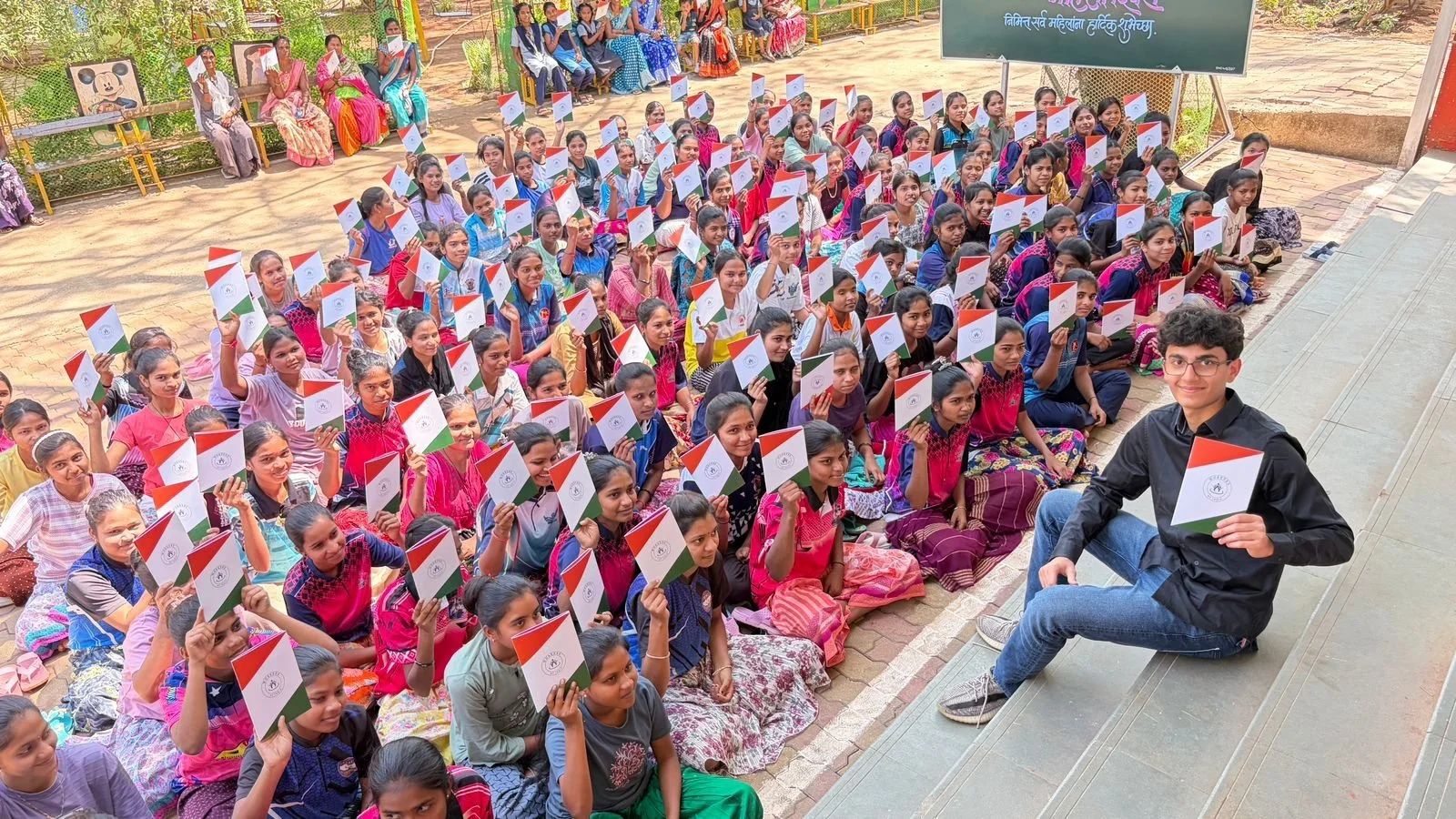
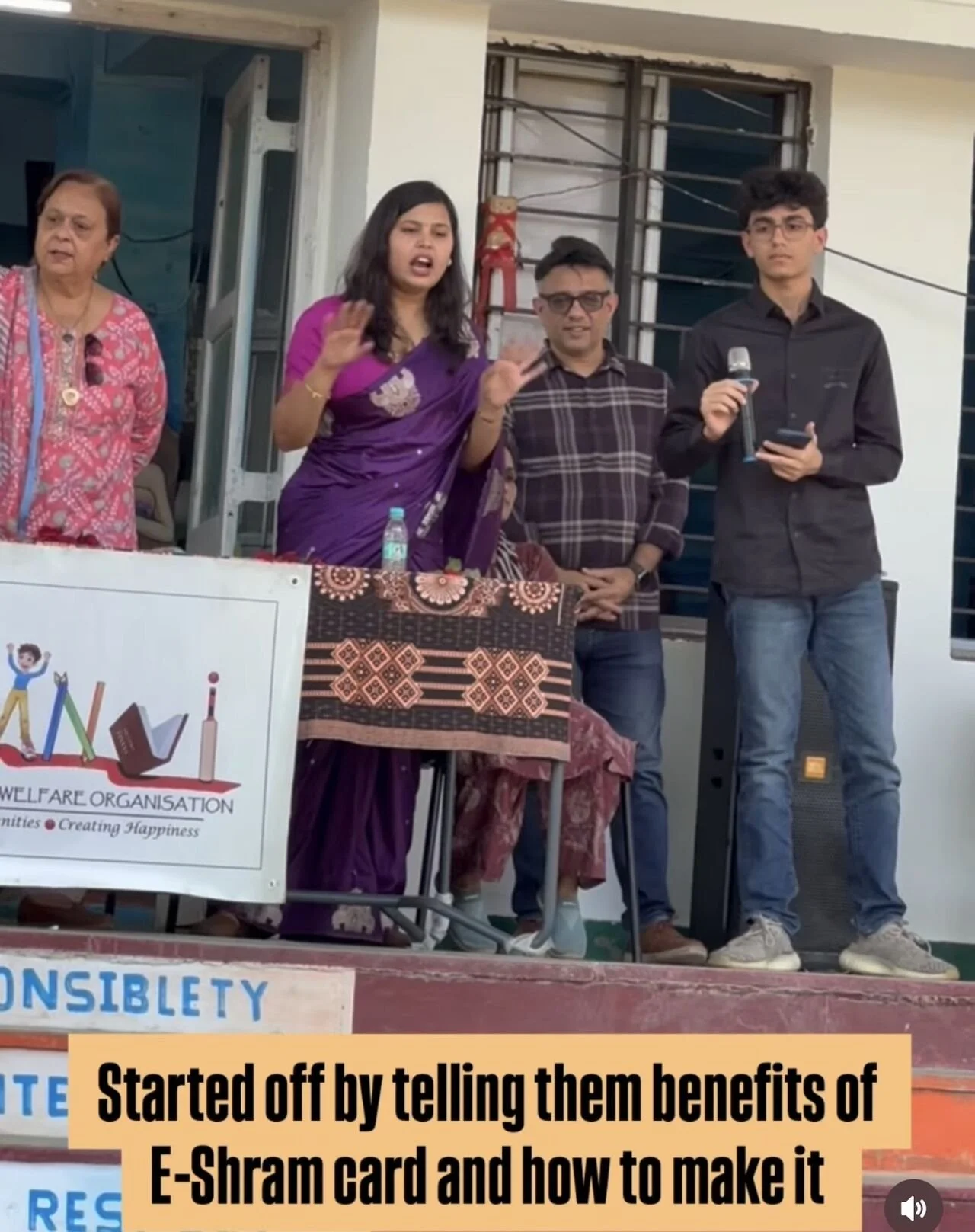
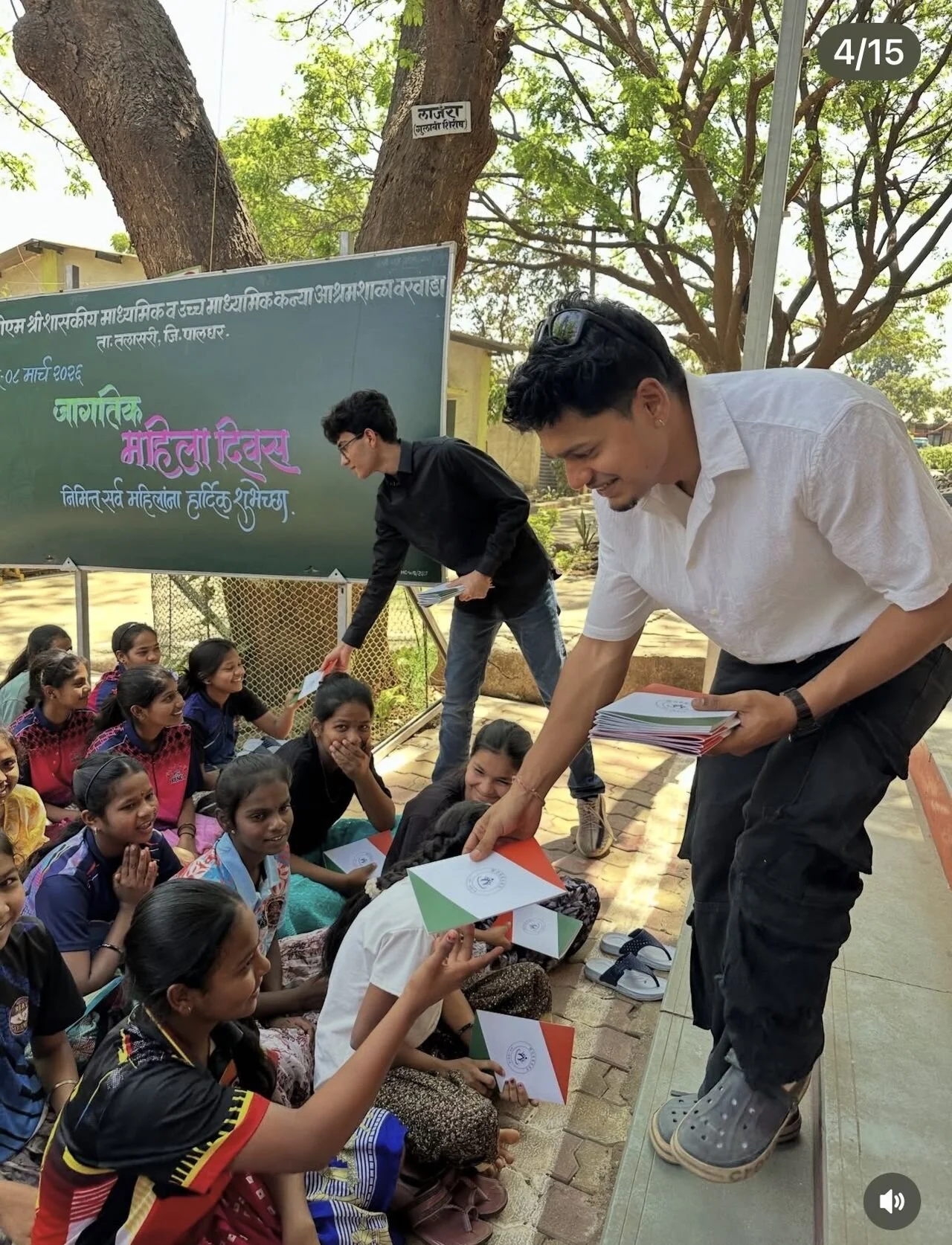
On International Women’s Day, I visited a school in Palghar to speak with students and their families about the e-Shram card and the social security benefits it provides to workers in the unorganized sector. What began as a simple awareness session quickly turned into a powerful reminder that access to the right information can change how communities think about their future.
On International Women’s Day this year, I had the privilege of spending time at Shaskiya Ashramshala Varwade, a school in the Palghar district of Maharashtra. I went there expecting to conduct a simple awareness session. Instead, I walked away with an experience that stayed with me long after the visit ended.
The visit was organized through Workers of India in collaboration with the Saanvi Social Welfare Organisation. The goal was simple. We wanted to help families understand the e-Shram card.
For many workers in India’s unorganized sector, the e-Shram card can open the door to social security. It connects workers to insurance coverage and government welfare schemes and gives them recognition within the system. Yet many eligible workers never register. The problem is usually not eligibility. It is awareness.
That is where conversations matter.
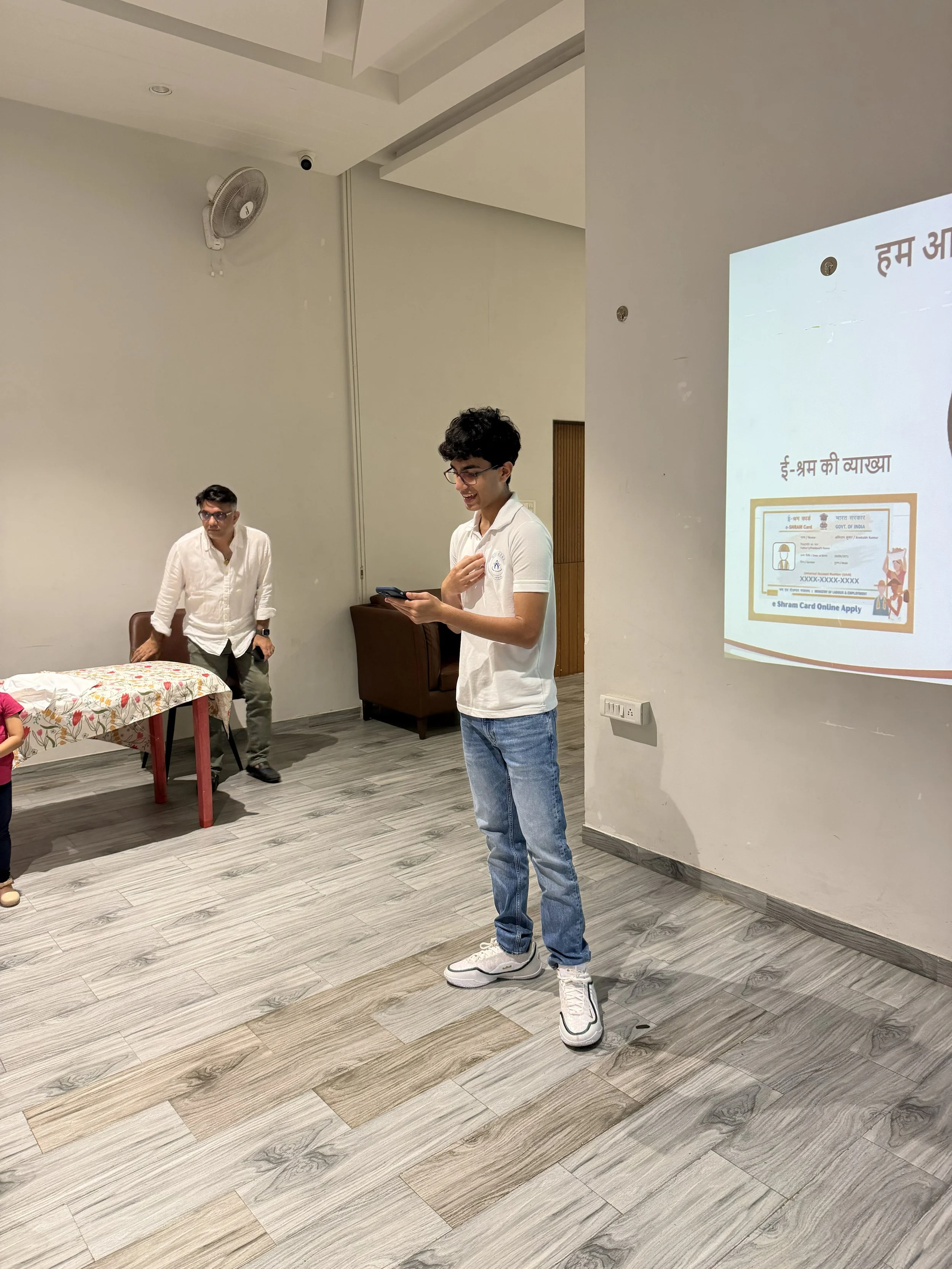
During the session, I spoke with students and their parents about the e-Shram card. We went through the full registration process step by step. I explained what documents are needed, how the application works, and what benefits the card provides.
But the most memorable part of the day was not the information being shared. It was the people in the room. Nearly 250 young girls were sitting together, listening carefully and asking thoughtful questions. Many of them were thinking about how this information could help their families. They were not just curious. They were already thinking about responsibility and about their parents’ futures.
Watching them made something very clear to me. Empowerment often begins with something simple. It begins when people have access to the right information. One conversation can travel far beyond the room where it starts.
Speaking with the parents was equally eye opening. Several of them had never heard of the e-Shram card before. Others had heard the name but did not know how to apply or what it actually offered. The gap was not interest or willingness. The gap was knowledge. Once people understand their options, things begin to change.
This visit also marked an important milestone for Workers of India. With this session, we have now reached 700 people through our outreach efforts. When I first set our goal to reach 3,000 workers by the end of 2026, it felt ambitious. Days like this make that goal feel possible. Progress does not always happen through big announcements or major programs. Often it happens through small gatherings, classrooms full of questions, and families learning about opportunities that were always meant for them. There are still 2,300 workers left to reach. But after seeing the energy and curiosity in that room in Palghar, I feel more confident than ever that we will get there. The momentum is building and this is only the beginning.
I am deeply grateful to the Saanvi Social Welfare Organisation and Ms. Isha Rawat for making this visit possible. Being able to spend time on the ground and connect directly with communities is something I truly value, and I appreciate their support in making it happen.
Because in the end, empowerment does not always start with big changes. Sometimes it simply starts with sharing what people deserve to know.
From Permission Delays to 80 Attendees: A Workshop That Almost Didn’t Happen
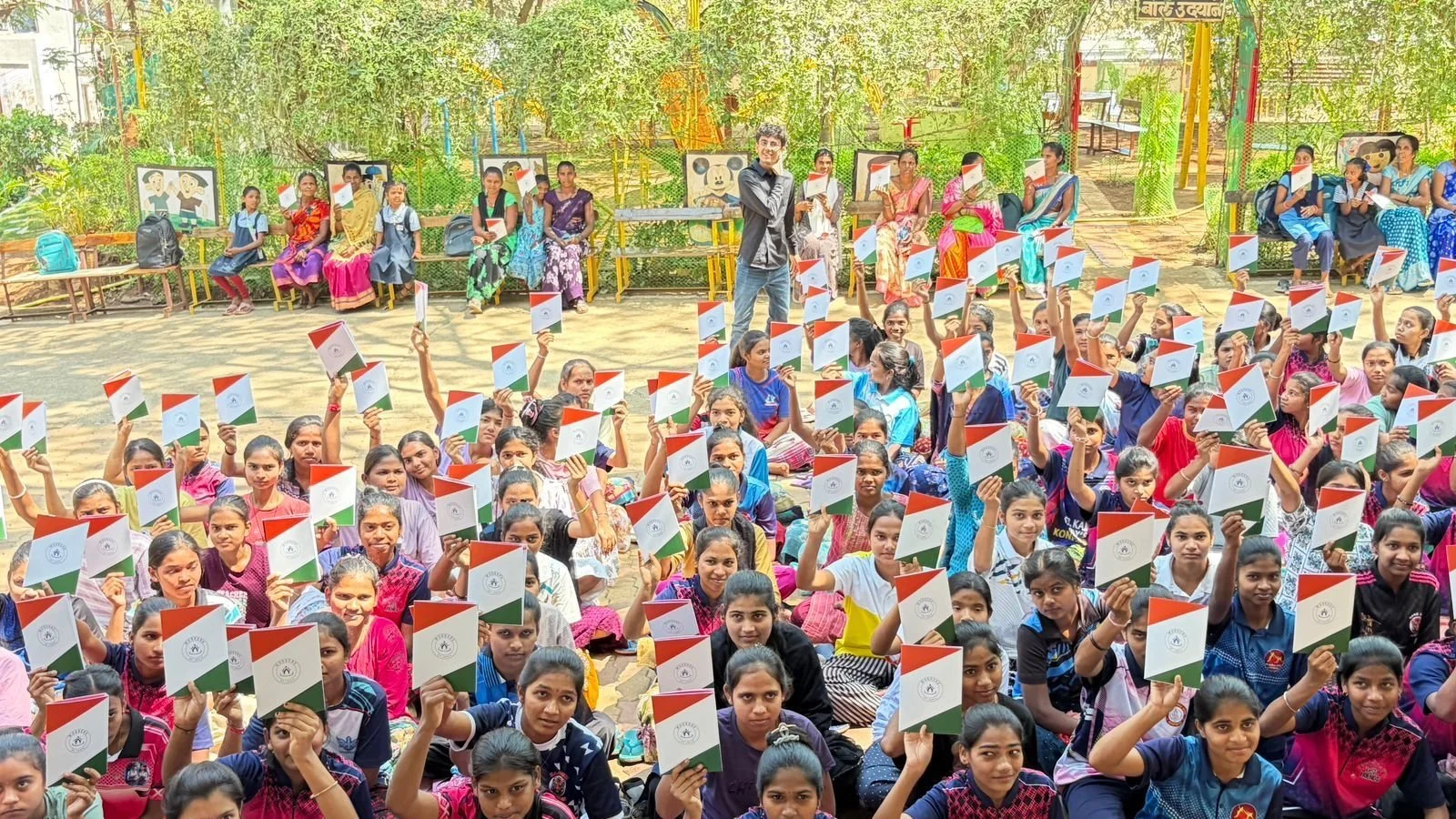
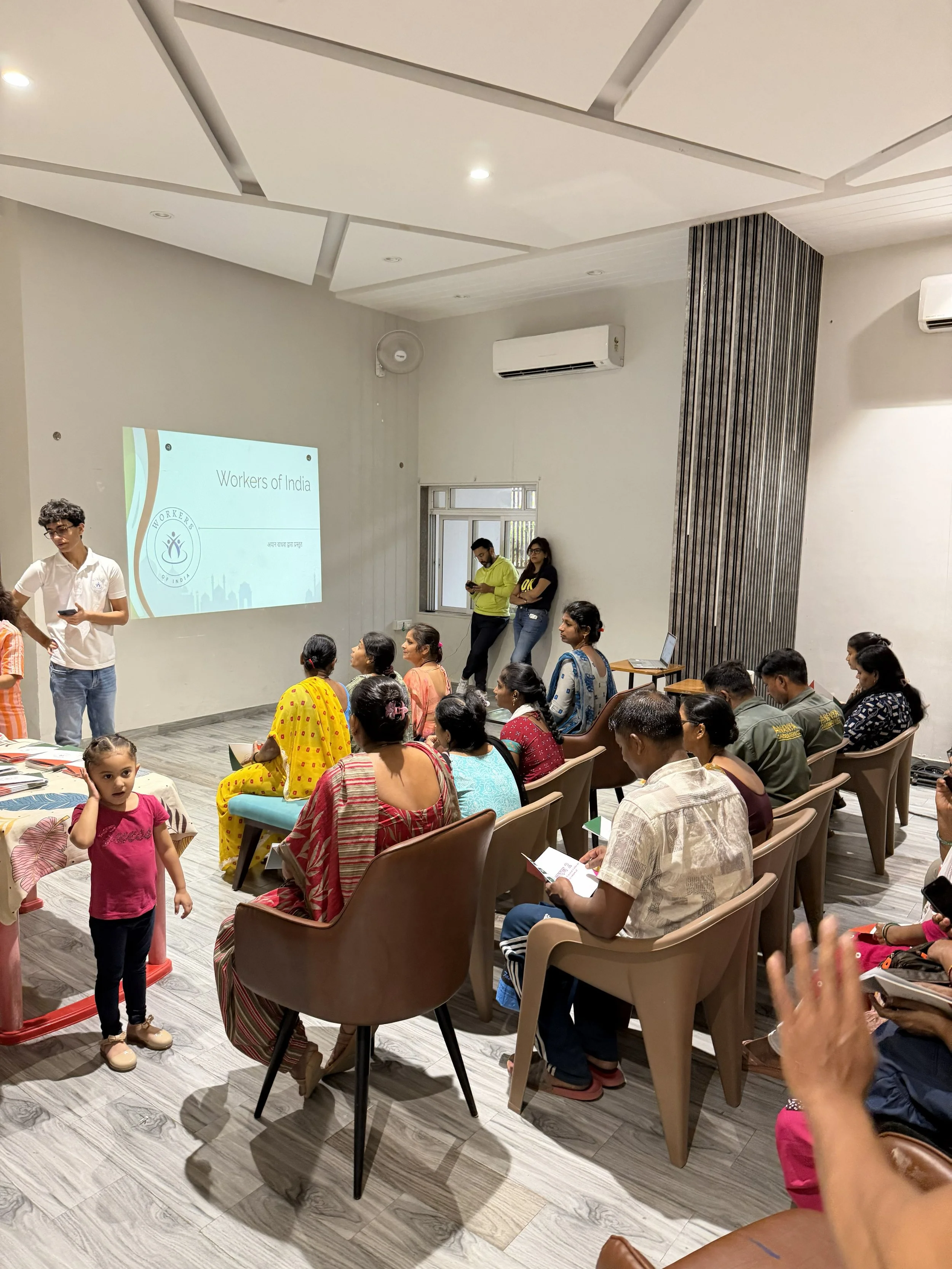
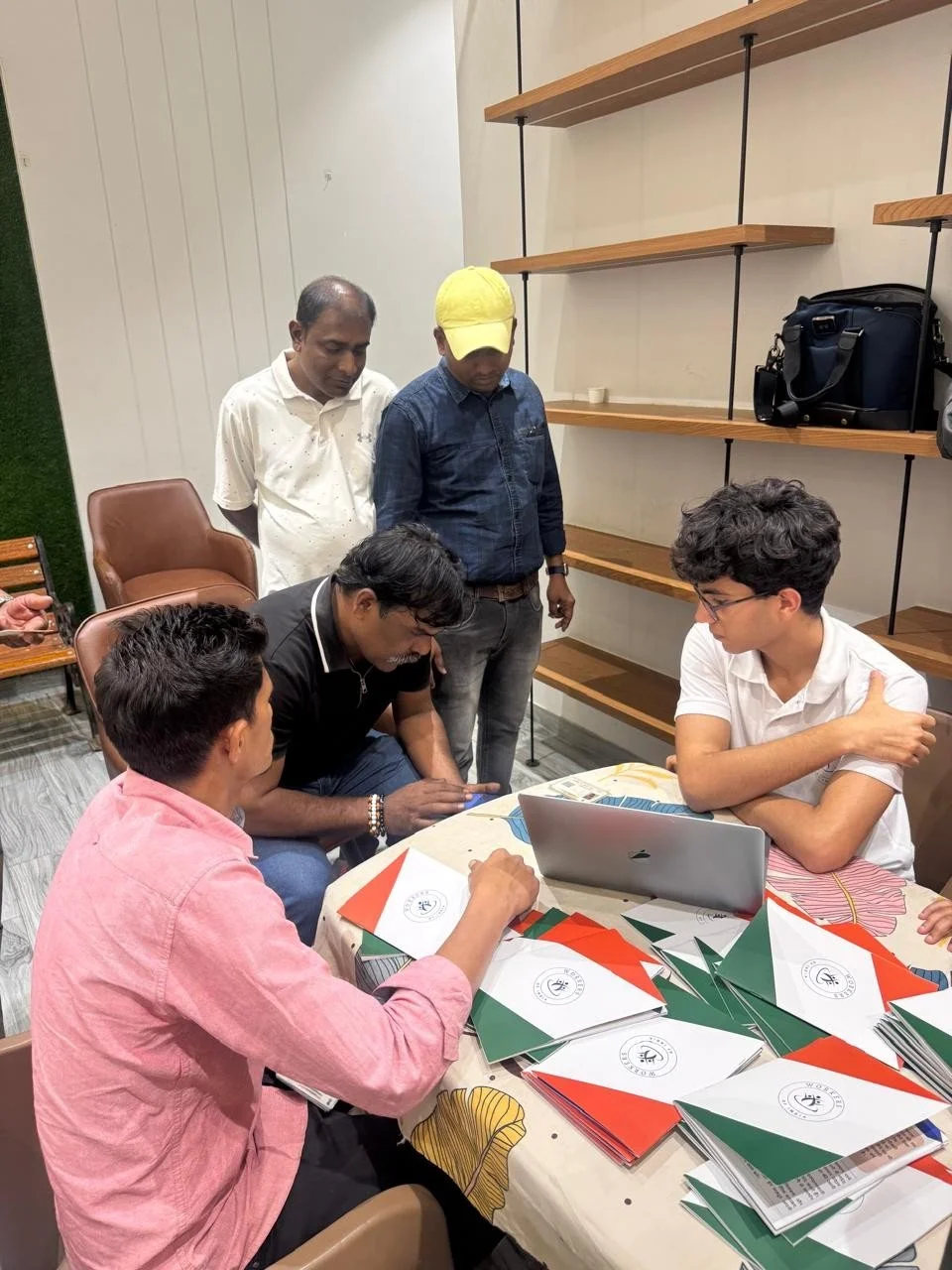
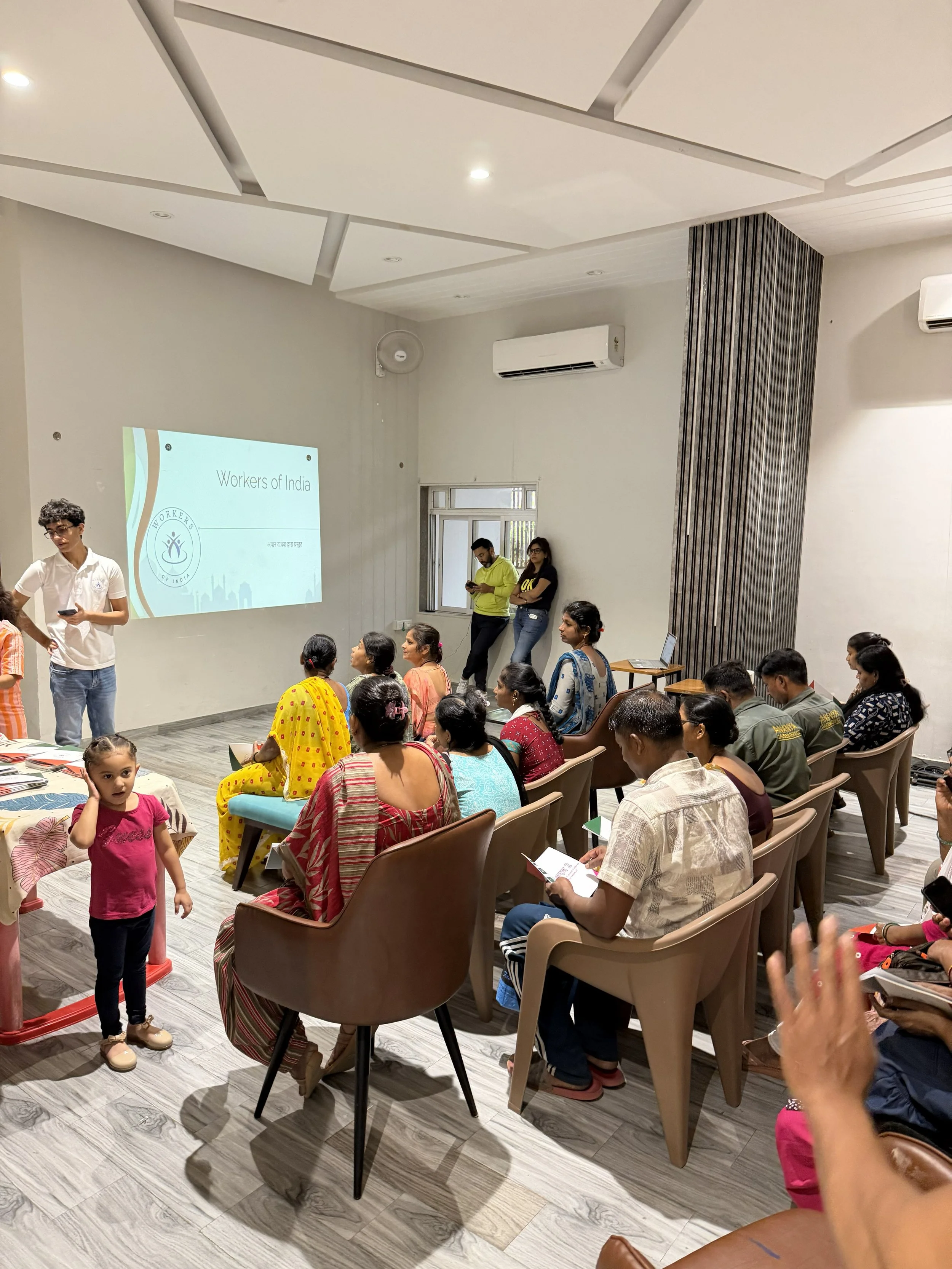
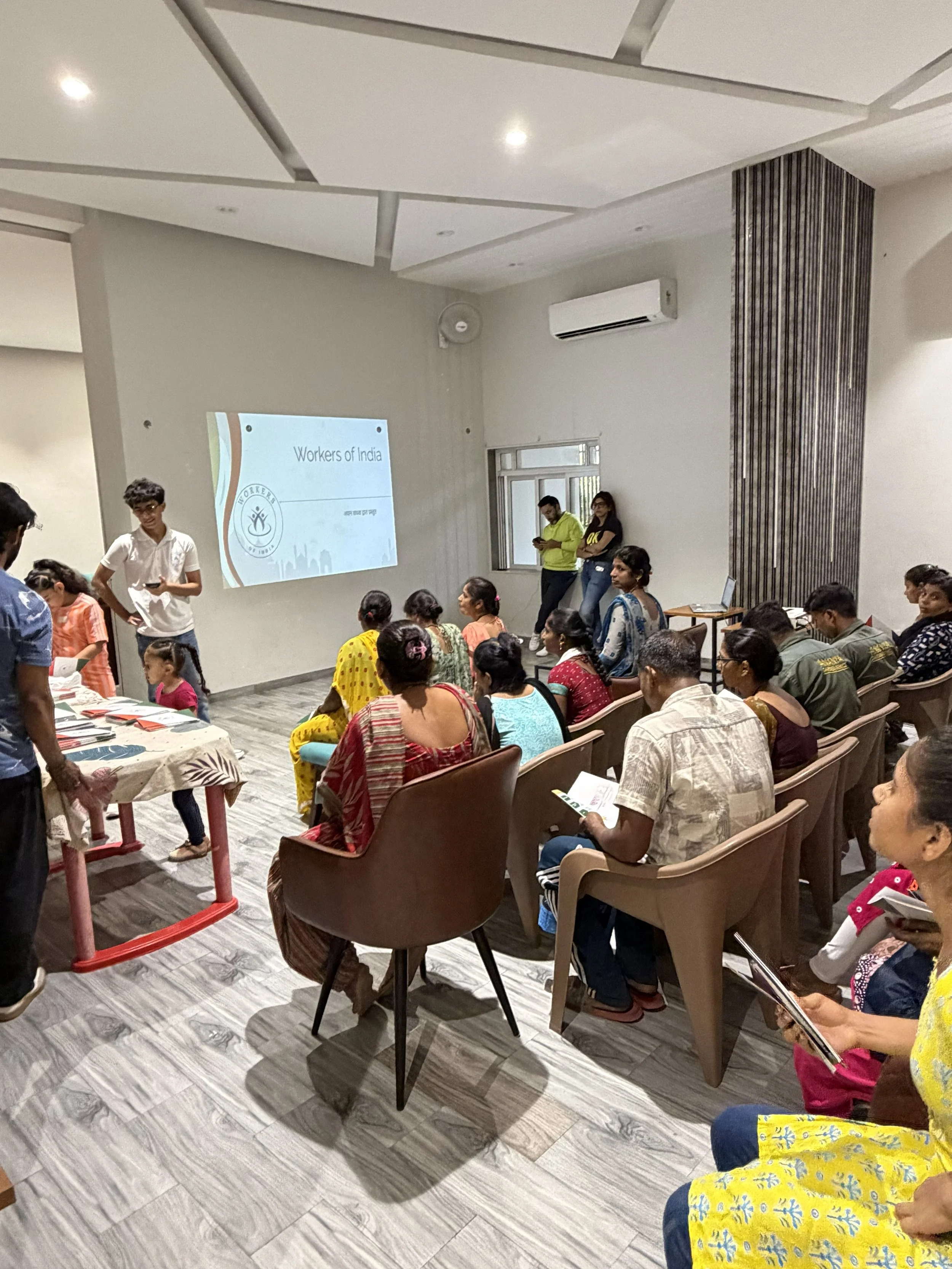
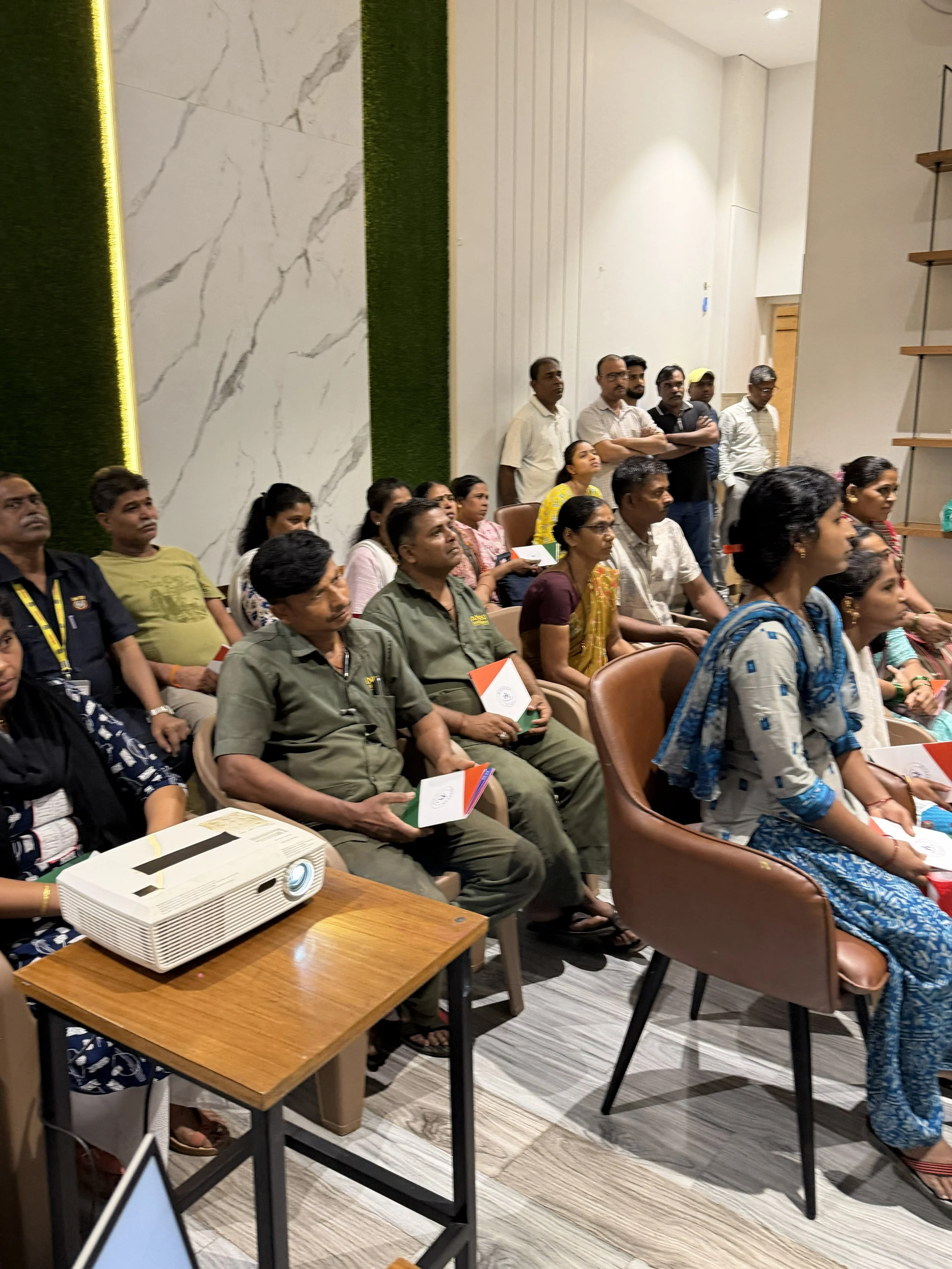
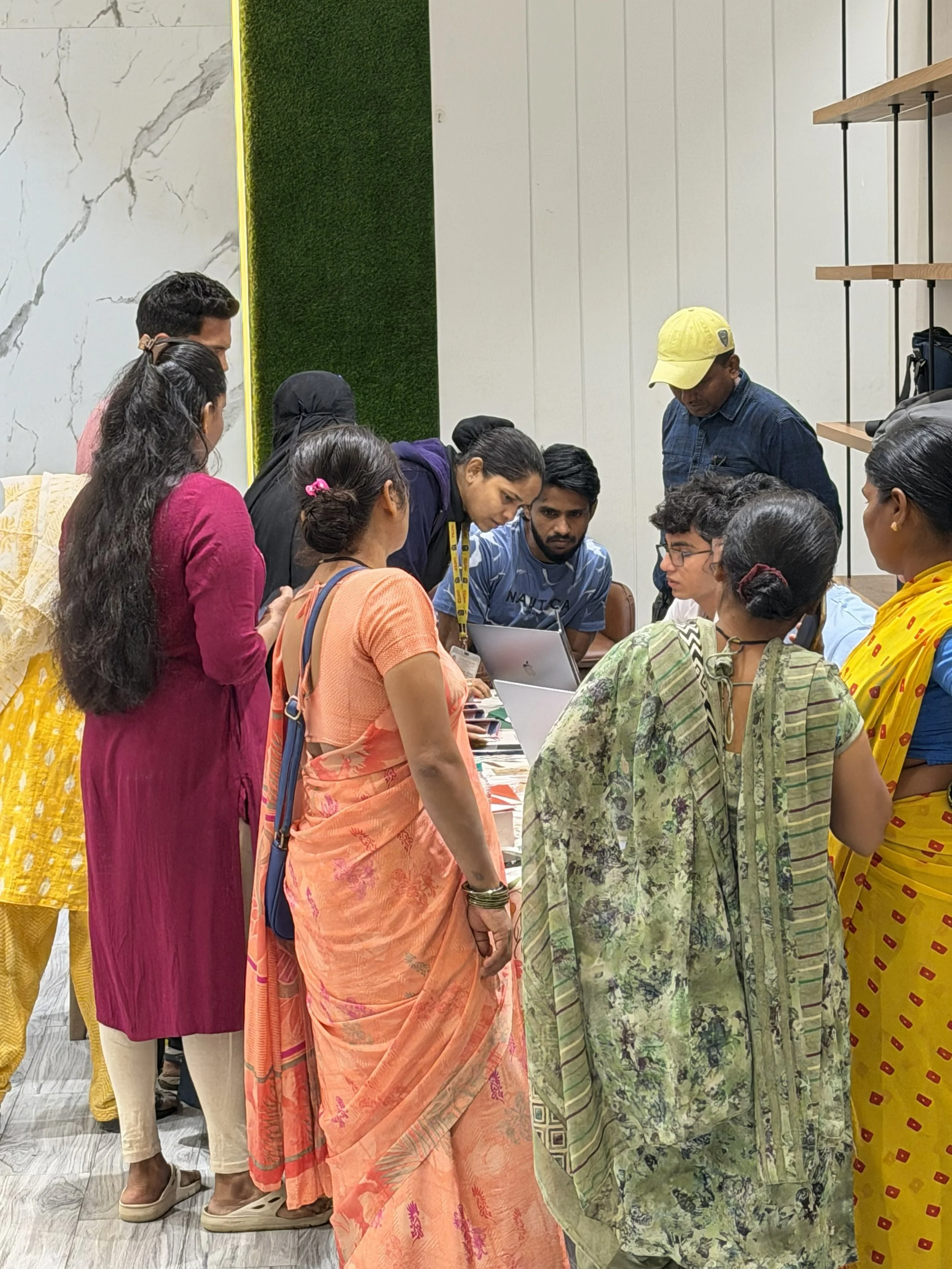
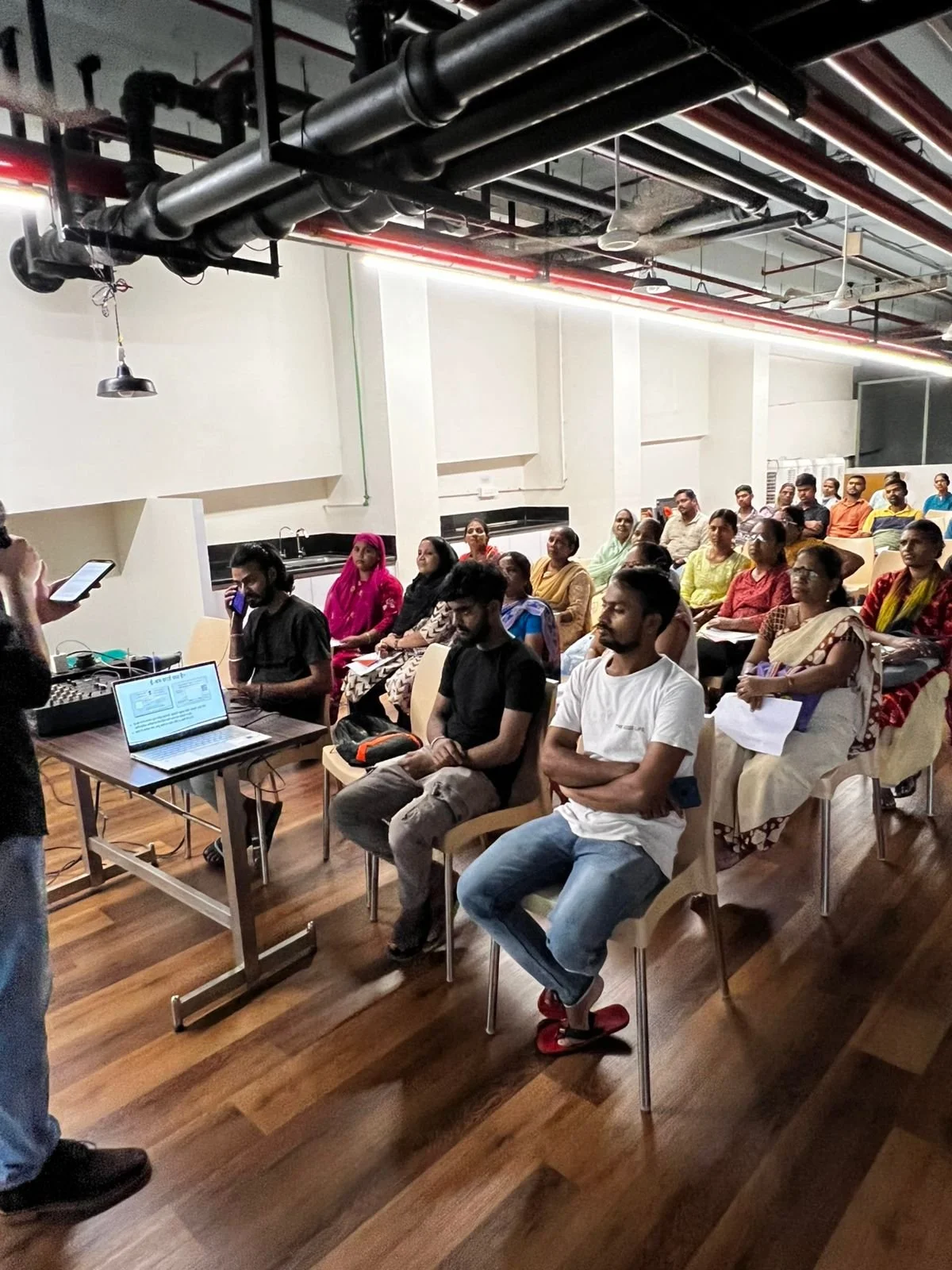
On January 24th 2026, the 3rd workshop for Workers of India was held. The permissions to conduct this workshop came with some level of difficulty I wasn’t anticipating. It was held in an area in Mumbai that I do not reside in. It took a while to convince the housing society to give me the said permission. But, all is well that ends well. I wasn’t expecting many people to show up as I wasn’t able to get the promotions going till the last week before the event. But I suppose with word of mouth, we saw crowds of domestic helpers coming in to attend the workshop and we were able to register most of them that attended. We had over 80 people attend the event. At the end of the day, people getting excited about their rights and asking several questions and taking in the plunge to helping themselves is what makes it worth it.
On January 24th, 2026, we held the third workshop for Workers of India. Looking back, it almost didn’t happen the way I had imagined.
The first challenge was something I had not anticipated. Getting permission to conduct the workshop turned out to be more difficult than expected. The event was being held in a part of Mumbai where I do not live, and convincing the local housing society to allow the workshop took time and several conversations. There were moments when I wasn’t sure if we would actually be able to go ahead with it.
Eventually, the permission came through, and the workshop was back on track.
The next concern was attendance. Because of the delays with the venue approval, I could only begin promoting the workshop during the last week before the event. That did not leave much time to spread the word, and I prepared myself for the possibility that only a small number of people might show up.
But the day turned out very differently from what I had expected.
Through word of mouth, domestic helpers in the area began hearing about the workshop. One person told another, and slowly people started arriving. By the time we got going, the room was filled with domestic workers who had come to learn about their rights and understand how they could access support and protections available to them.
In total, more than 80 people attended the workshop.
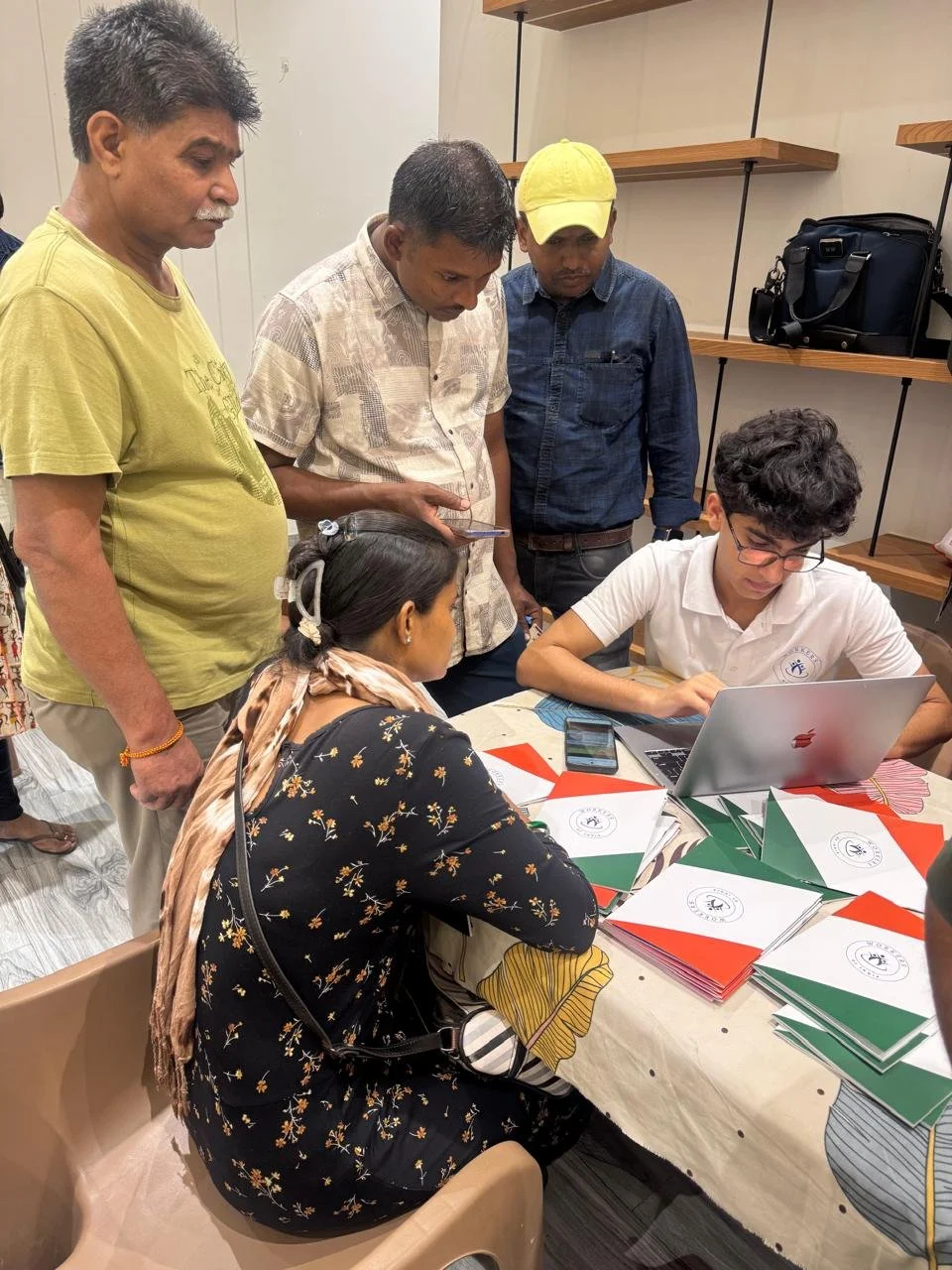
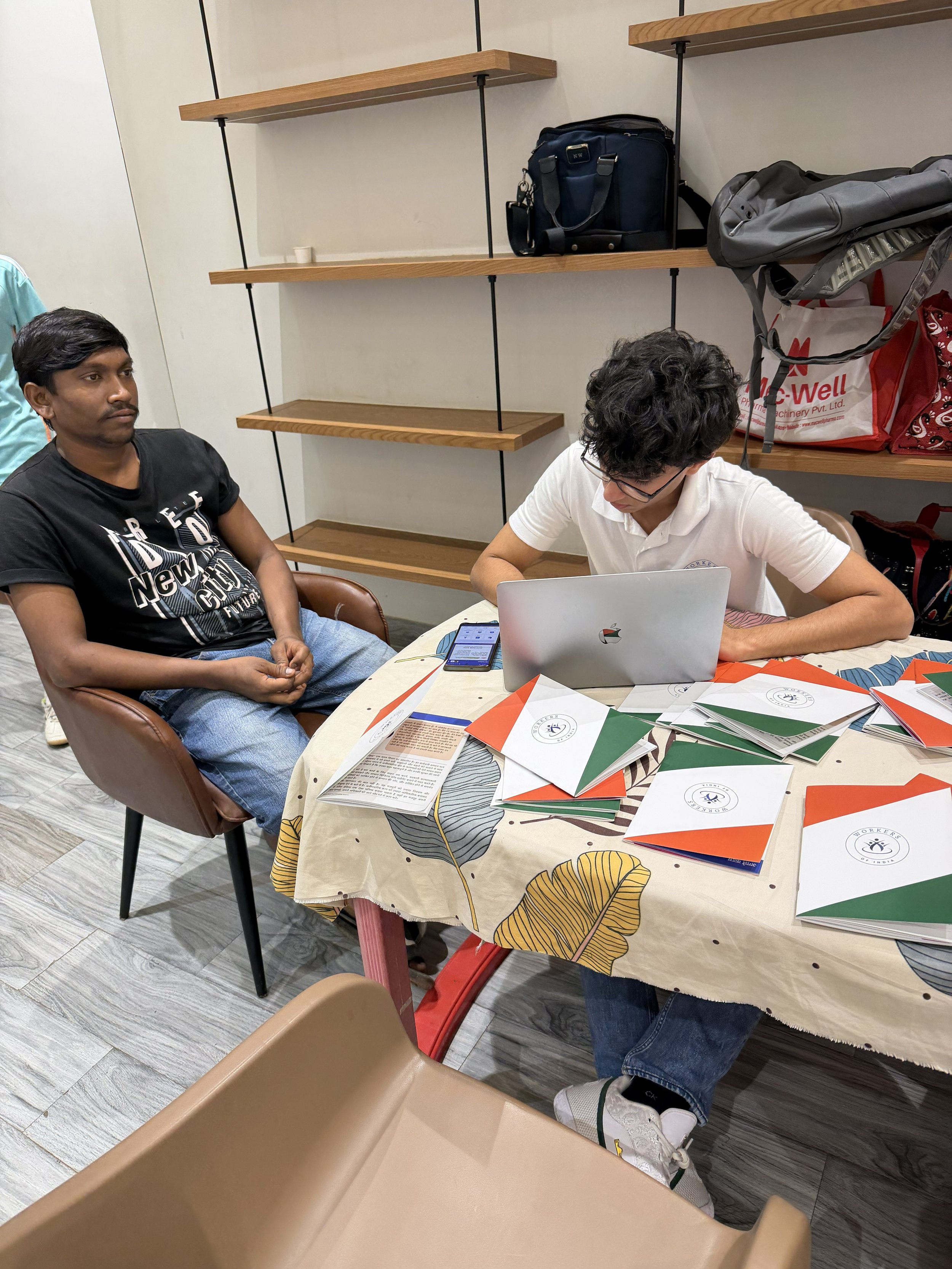
We were able to register most of the workers who came that day, but what stayed with me the most was the energy in the room. People were curious. They asked questions, shared their concerns, and wanted to understand what steps they could take to improve their situation.
Seeing that level of engagement reminded me why this work matters.
At the end of the day, the most meaningful part is not just organizing a workshop or meeting a target number of registrations. It is seeing people become excited about their rights and realizing that they have the ability to take steps that can help protect themselves and their families.
Moments like that make every challenge along the way worth it.
The Beginning of a Community Mentor Network
A while back, I had an idea that kept returning to me.
Most of the time, change seems to move in one direction. It usually flows from people who have access to information, resources, and opportunities to those who do not. That approach can create impact, but I kept wondering if it was the only way.
What if it did not always have to work like that? What if people from underprivileged communities themselves could become the ones spreading knowledge and helping others around them?
That thought slowly began shaping what Workers of India is becoming.
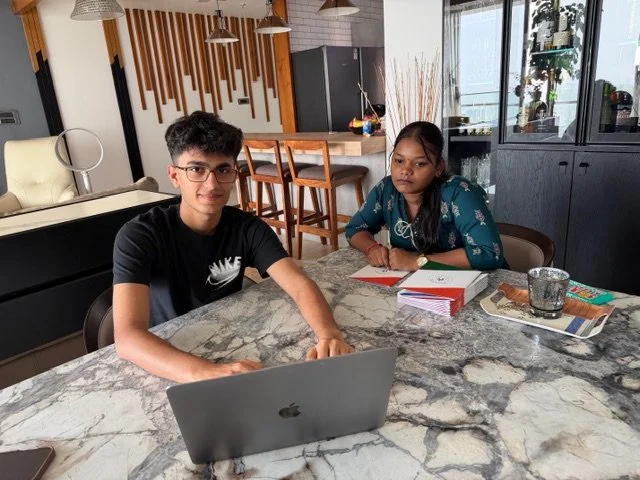
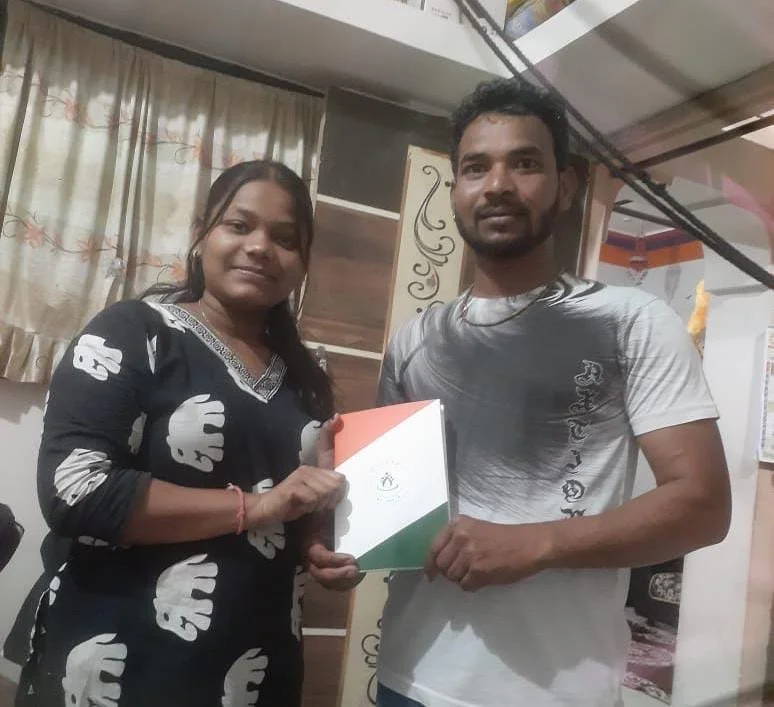
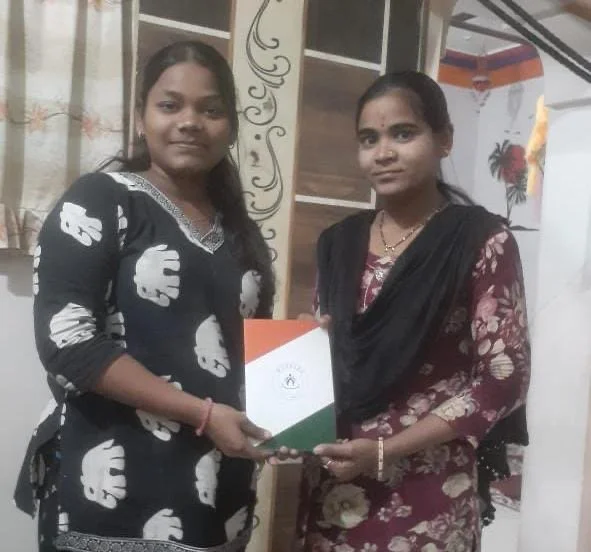
A few weeks ago, I decided to take a small step toward testing this idea. I reached out to a young woman from an underprivileged background who I believed had the potential to become a mentor within her own community. When we met, we spent time talking about the everyday challenges faced by workers around her. One theme kept coming up again and again. Many people simply did not know about their rights or the welfare schemes that were meant to support them.
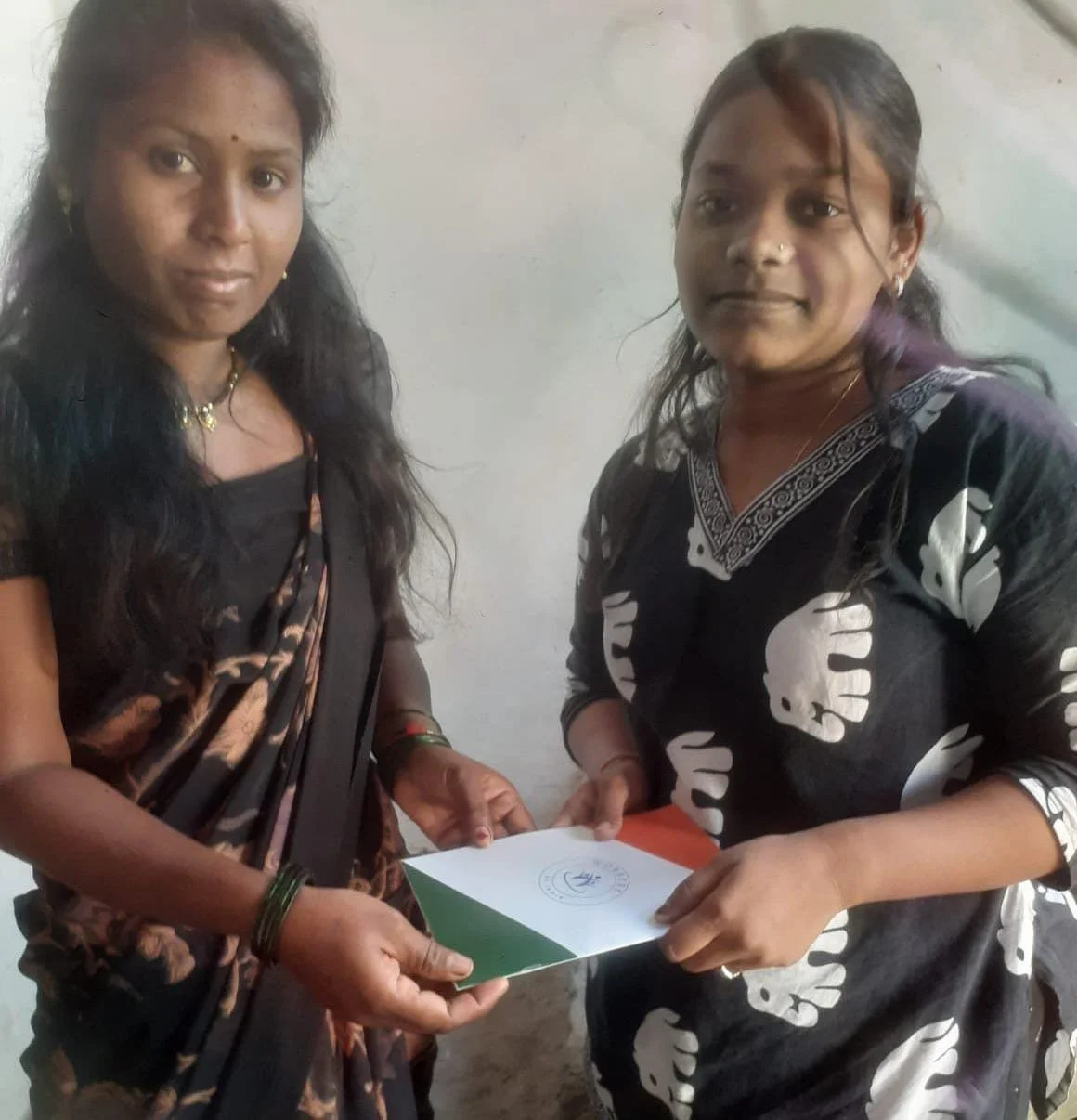
During our meeting, I introduced her to the Workers of India booklet and walked her through the e-Shram registration process in detail. We spoke about why the e-Shram card matters, how it gives workers an official identity, and how it connects them to social security schemes. I wanted to make sure she understood the process clearly and felt confident enough to explain it to others.
After our conversation, she returned to her community with the booklet in hand.
Over the next few days, she spoke with workers around her and shared the information we had discussed. Through her efforts, she was able to reach 10 different workers and guide them through the details of the e-Shram card.
Those were 10 people I would likely never have reached on my own.
Seeing this happen reinforced something important for me. Real and lasting impact does not come from one person trying to do everything. It grows when people within communities are given the knowledge and confidence to lead change themselves.
This small step has helped shape what comes next.
Going forward, I want to build on this idea by creating a network of community mentors. The goal is to equip individuals with the knowledge they need so they can bring it back to their own neighborhoods and workplaces. When information travels through trusted people who understand the realities of their communities, it moves further and faster.
This is still the early stage of that vision.
But every movement begins somewhere, and this feels like the first real step.
A Reminder of Why I Started Workers of India
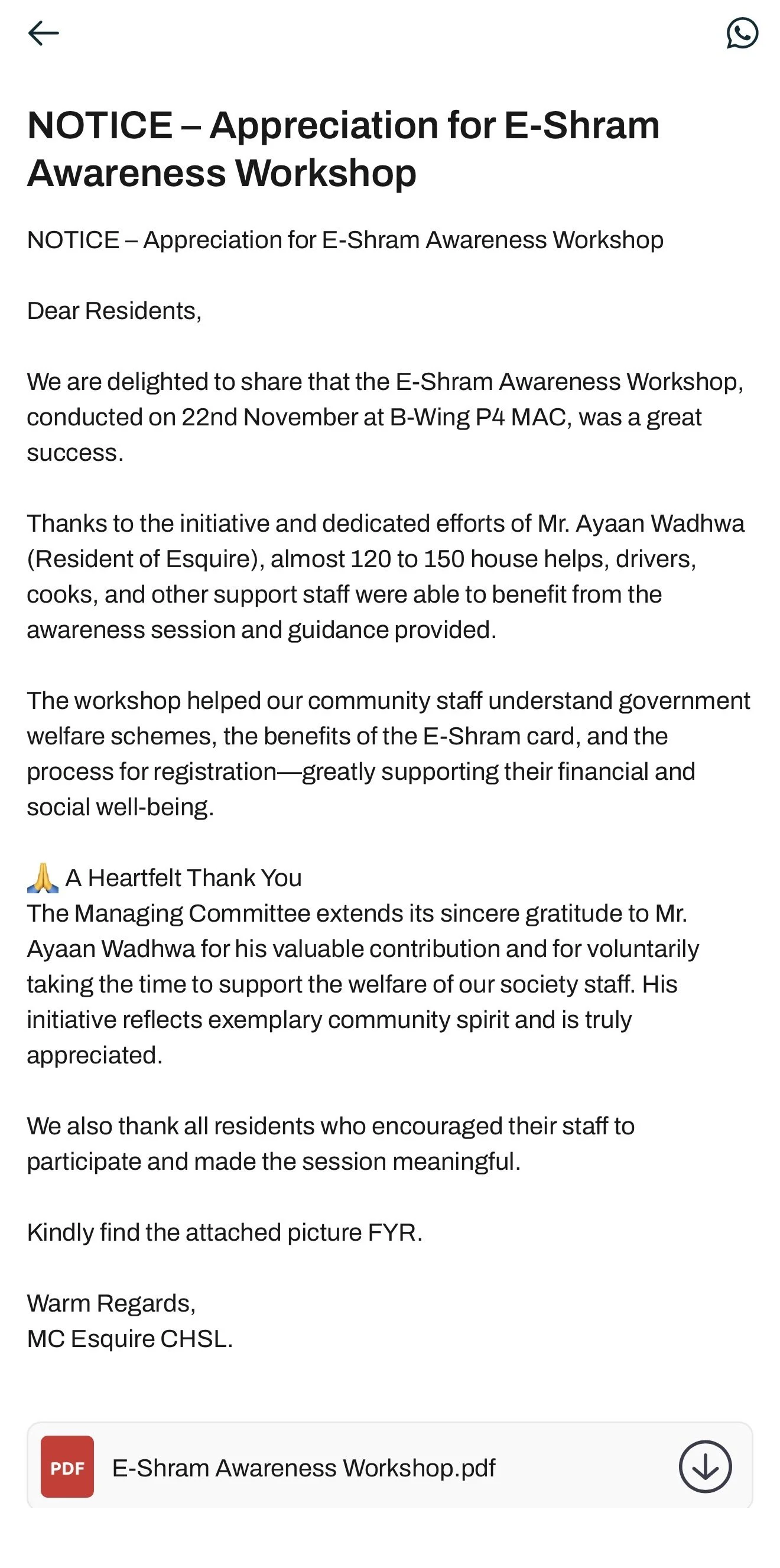
Yesterday, I received a letter of appreciation from my housing society after conducting the E Shram Awareness Workshop. It was a small gesture, but it meant a lot to me.
What began as a simple effort to guide the staff who support our community turned into something much more meaningful.
When I first planned the workshop, the goal was straightforward. I wanted to help domestic workers, drivers, cooks, and other support staff understand the E Shram card and the benefits it offers. Many workers in the unorganized sector are eligible for government schemes and social security protections, but they often miss out simply because they are not aware of them.
The workshop was an attempt to change that, even if in a small way.
On the day of the session, around 120 to 150 workers attended. House helps, drivers, cooks, and other support staff gathered to learn about the E Shram card and the government schemes connected to it. What stood out to me most was the level of interest in the room.
People listened carefully. They asked thoughtful questions. Many of them wanted to understand not only how to register, but also how the card could help them and their families in the long run.
Their curiosity and engagement reminded me why I started Workers of India in the first place.
The people who help run our homes and keep our communities functioning every day deserve access to the same information and protections that many of us take for granted. Sometimes the only barrier standing in the way is awareness.
Seeing so many workers eager to learn reinforced my belief that when people are given the right information, they are ready to take steps to secure their own future.
Receiving the letter of appreciation from the Managing Committee was encouraging, but this effort was never about recognition. It was about making sure that the workers who support our daily lives have access to knowledge that can protect their rights and strengthen their future.
I am grateful to the Managing Committee for their kind words and to the residents who encouraged their staff to attend the workshop.
Most of all, I am thankful to every worker who took the time to show up, listen, and participate. Their presence and enthusiasm are what made the workshop truly meaningful.
If anything, this moment has encouraged me to keep going and continue doing my small part for the people who keep our communities running every single day.
Thank you, everyone. 🙏
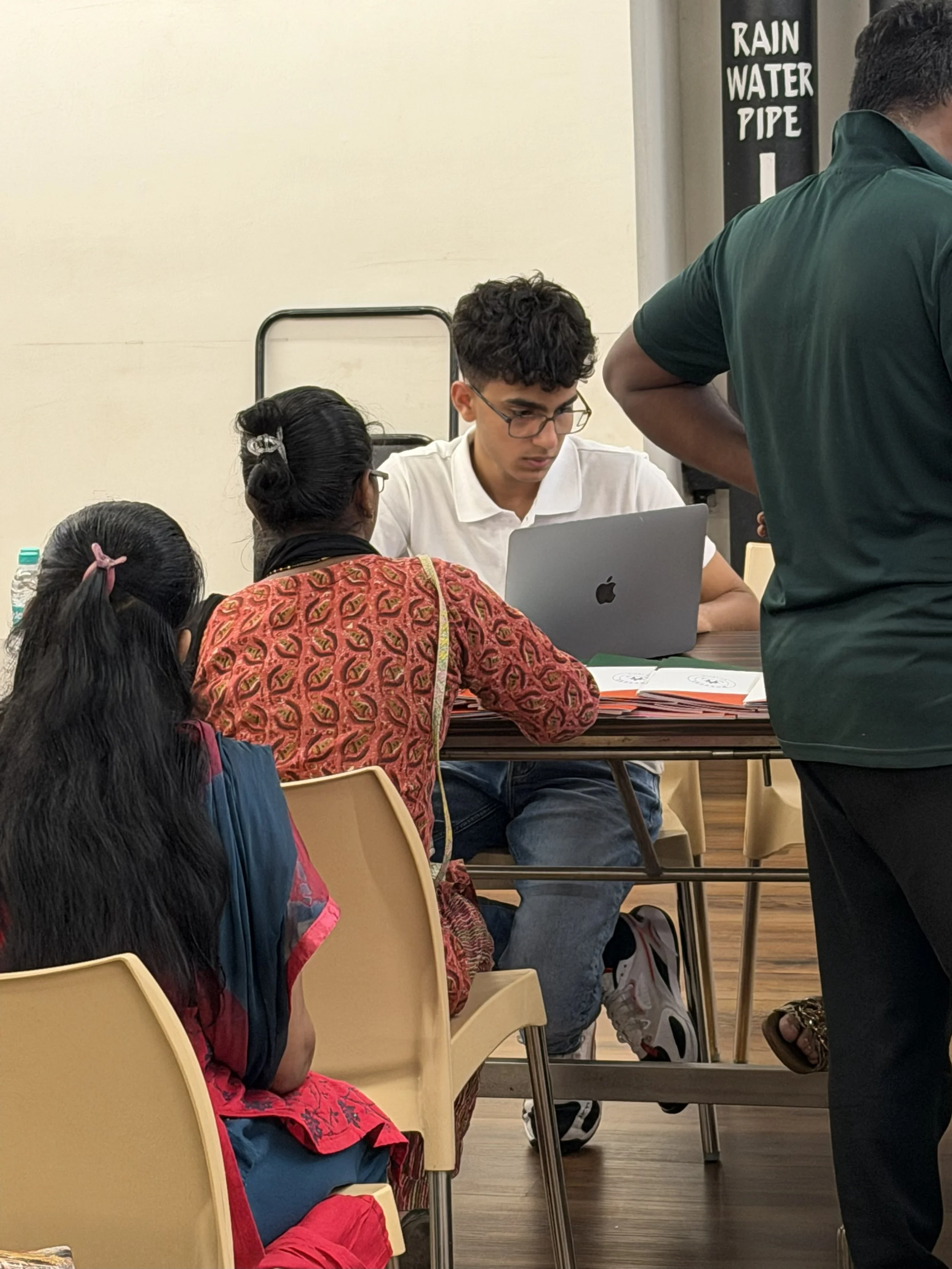
The second workshop
I am delighted to announce that Workers of India hosted it’s second ever workshop yesterday, on November 22nd. We were able to gather 65+ domestic workers across Oberoi Esquire housing society, and through both our distributed booklet and interactive presentation they were informed on what the e-Shram card is alongside its benefits. Additionally, post the presentation we were able to successfully register near 100% of the attendees.
This event was months in the making following our previous and equally successful first workshop. It took wide arrays of efforts from several parties from re-printing our booklets, logistically coordinating with the Oberoi Esquire team for finding a venue, to even the mics, projectors, and food at the event itself. But in the end it was all worth it, as we were successfully able to help those who help us.
I could not be more excited for the future of this project, so far we have helped over 150 workers, and by this time next year we hope to 10x that number!

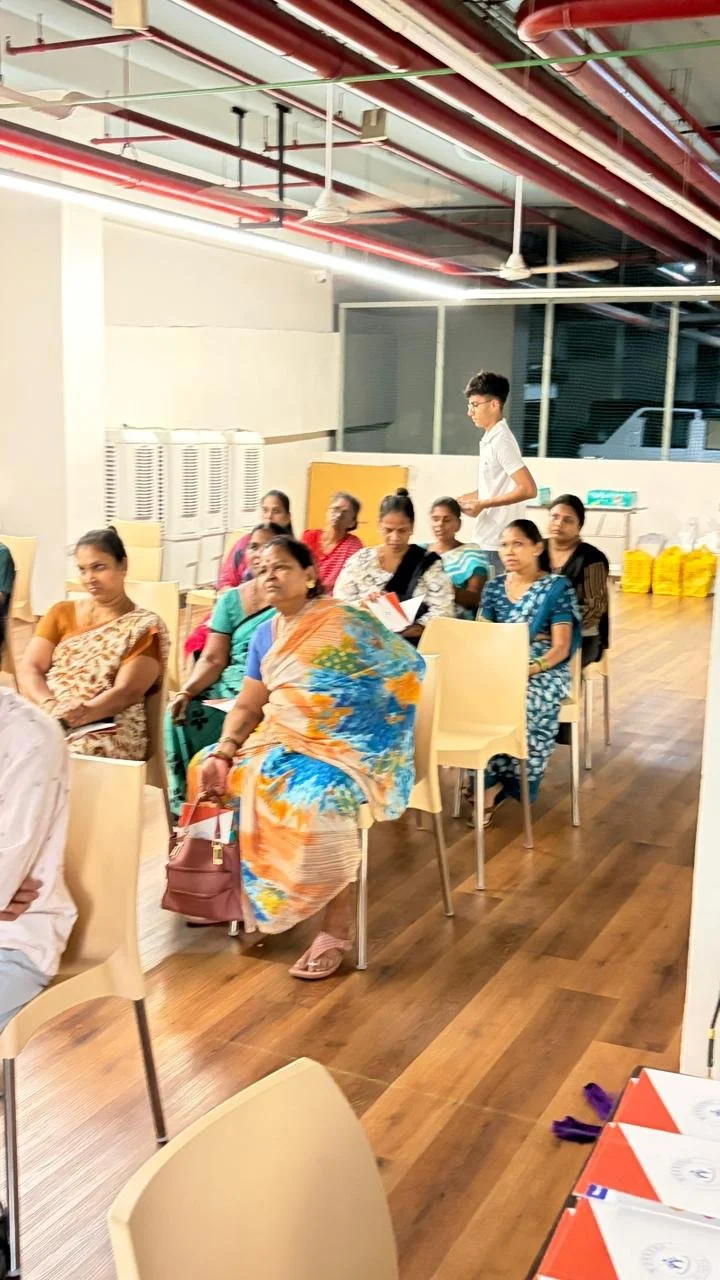
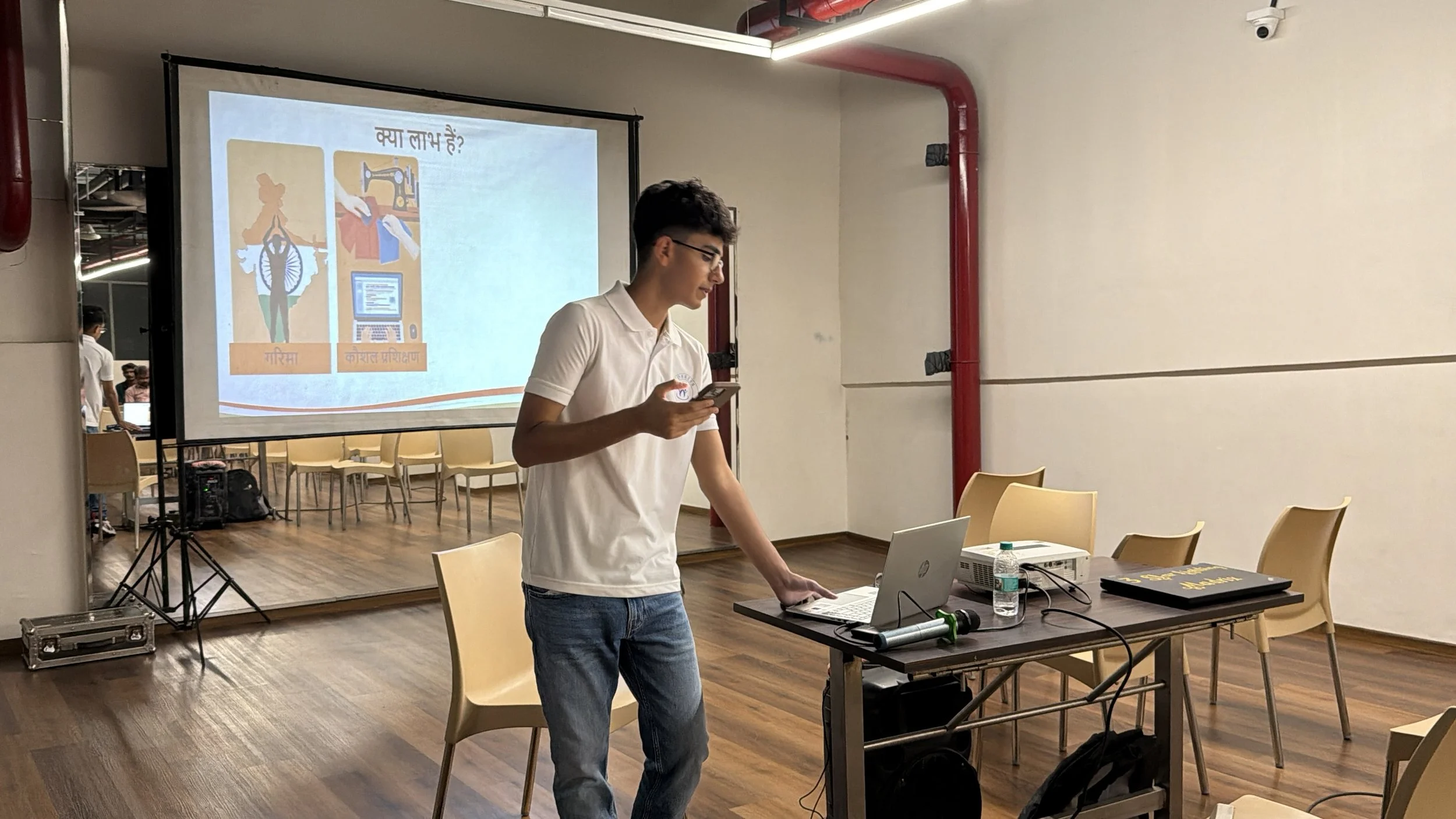
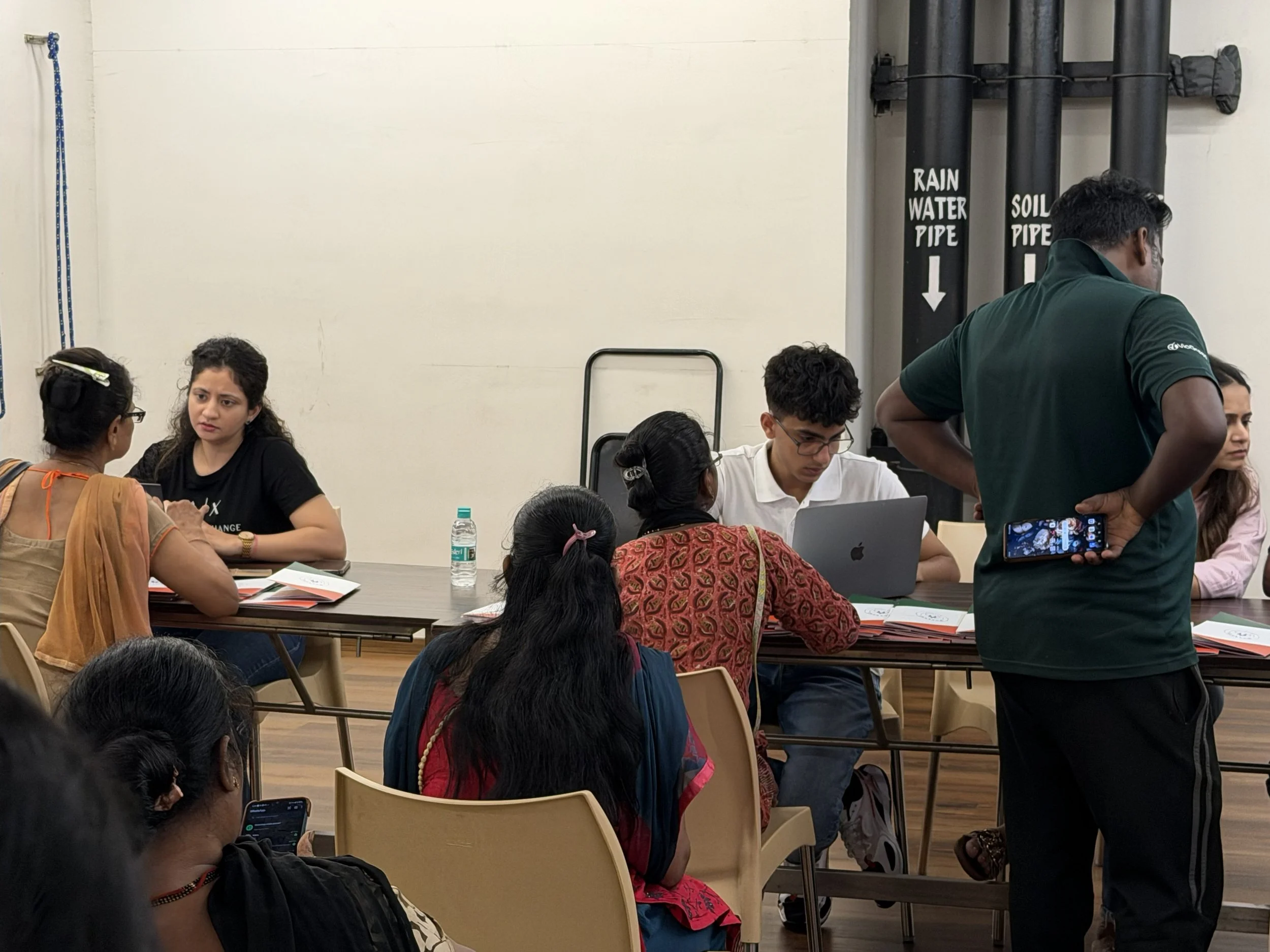


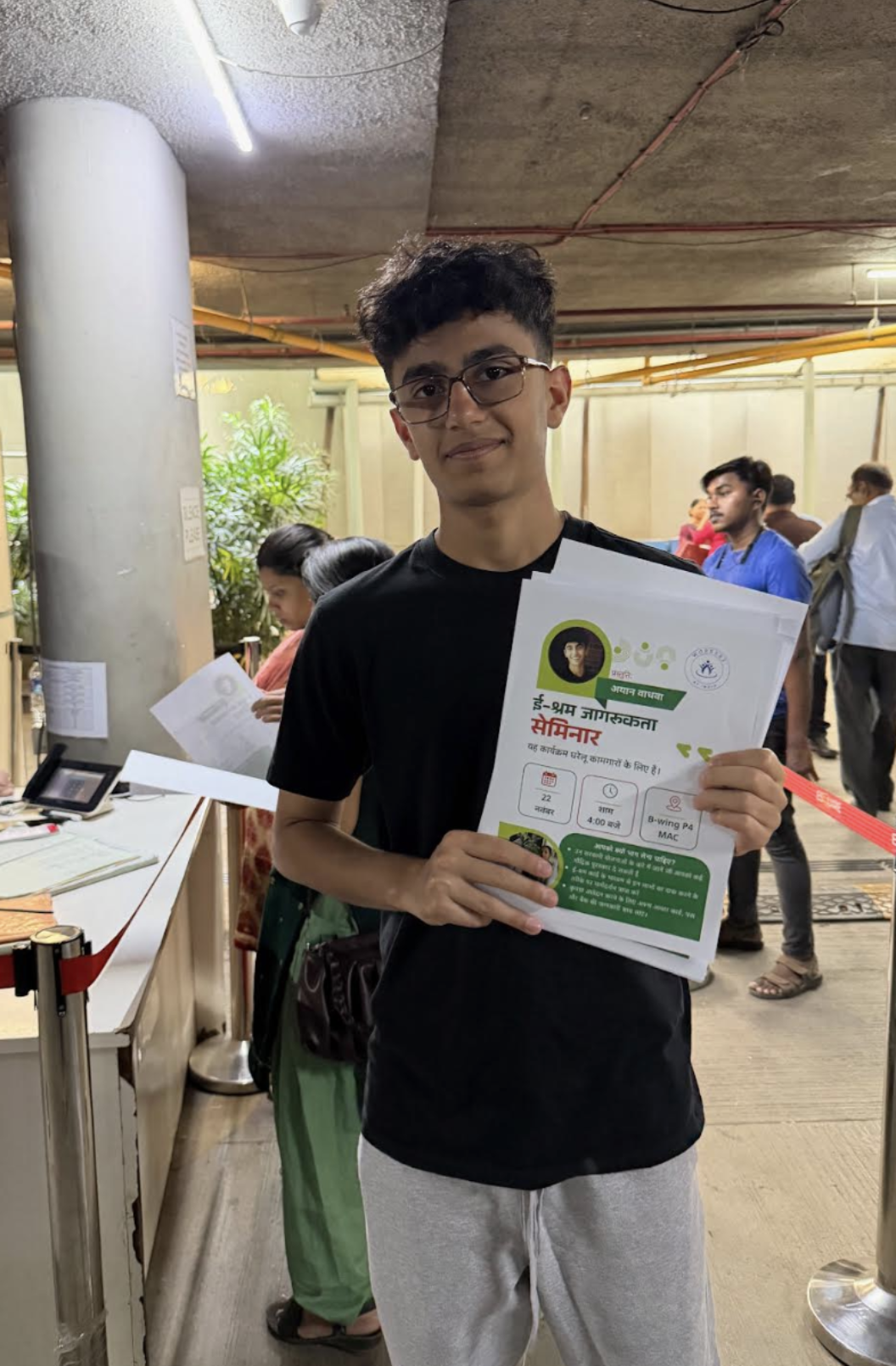
Gearing up for tomorrow’s workshop!
Tomorrow is my registration drive for the second workshop and I am feeling both excited and nervous at the same time. The first workshop gave me confidence but there is still a sense of uncertainty as I get ready for the next step.
Today I went around distributing fliers in my community. For the most part the excitement felt great and talking to people reminded me why this work matters. At the same time I also felt a bit of apprehension which I hope will clear tomorrow once the registration begins.
I am looking forward to seeing how the day goes and hoping the efforts from today help bring more people in.


Registration Drives
This drive was organized for people that had attended the first workshop and wanted to get themselves registered for the e-Shram card. They happened over the course of 2 days so that I could provide some flexibility to the people who wanted to register. A lot of people showed up on the first day of the drive. Unfortunately the e-Shram portal servers were not operational and I had to ask them to come back the next day. Thankfully, the site was back up and running the next day and I was able to help a lot of people get registered. Once again, the stark difference and inequality in education, living standards continues to ignite my cause to help the people who help us.


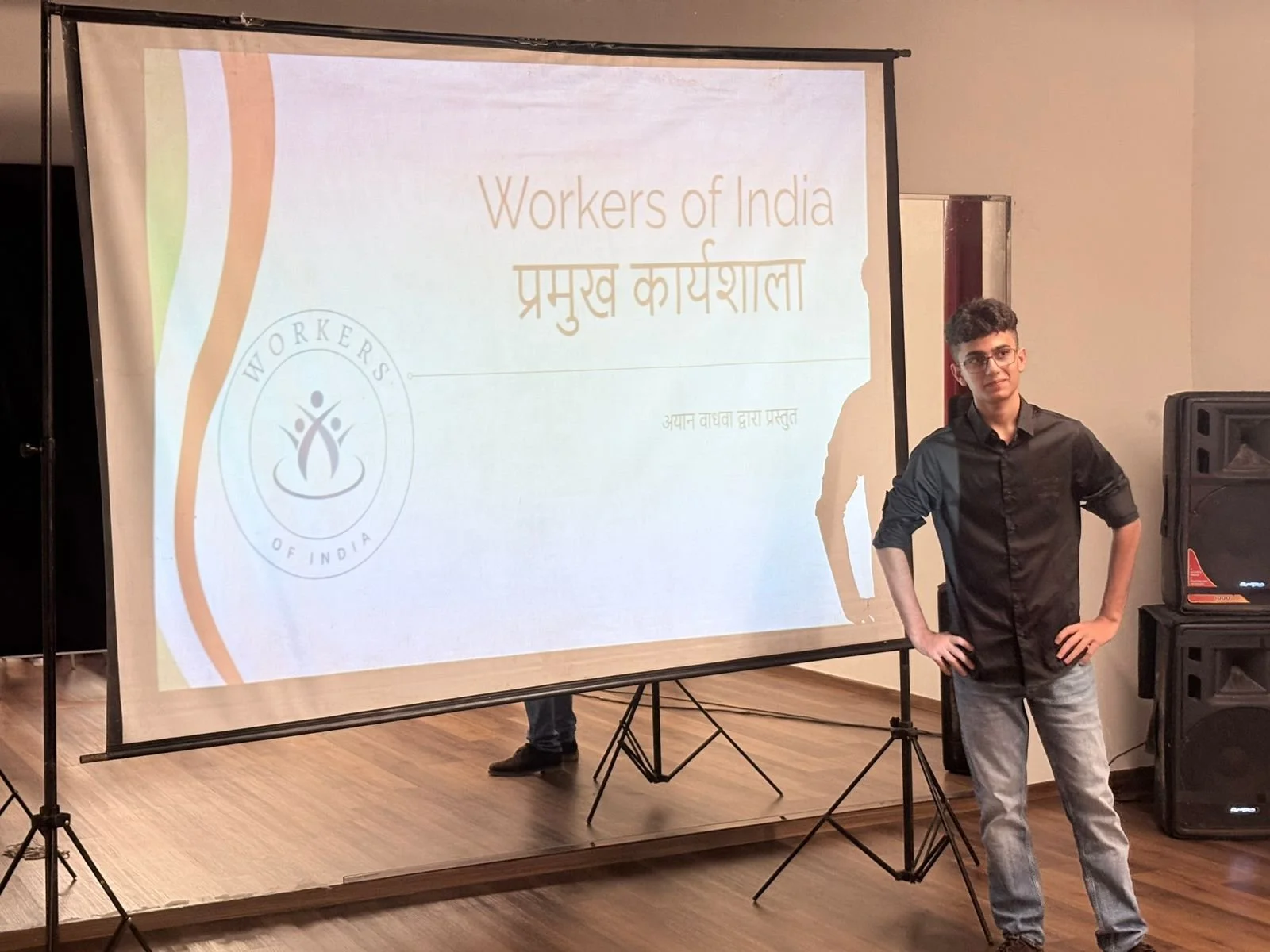
The first workshop!
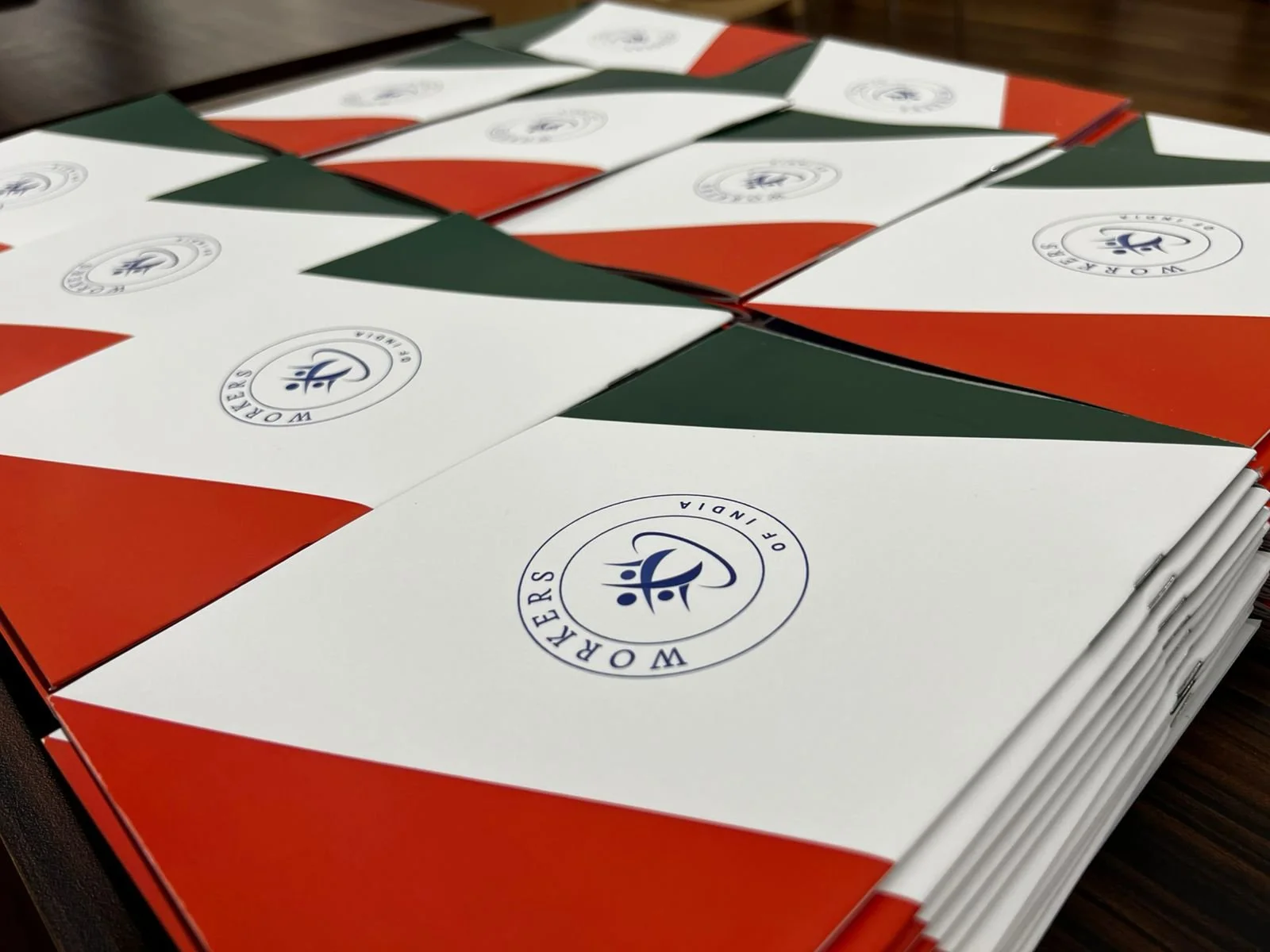
After months of research, planning and coordination, I had my very first flagship workshop for Workers of India to raise awareness about the e-Shram card. It also marked a day I gave my first presentation in Hindi - a language I understand but I have never spoken in formally with anyone. I had put out ads, distributed flyers. I wasn’t sure how many people would show up if any at all. As the time for the workshop was approaching, the people started coming in. And suddenly it was a full house. I gave them a booklet that I worked on all summer that talked about different things such as e-Shram benefits, semi formalization of the informal sector, financial literacy, etc.
People listened to me intently and at the end of the workshop I had promised that I would help some of them register for the e-Shram card. Again, I was anticipating only a few people would stay back for the registration. However, most of them stayed back and the news spread and suddenly I had around a 100 people in the room. I helped around 30-40 of them register. I collected phone numbers for the rest of them and I plan on having a follow up registration session soon so that I can complete their registration as well.
The feeling that I could spread awareness and help people who help us was an undeniably good one. This is just the beginning.
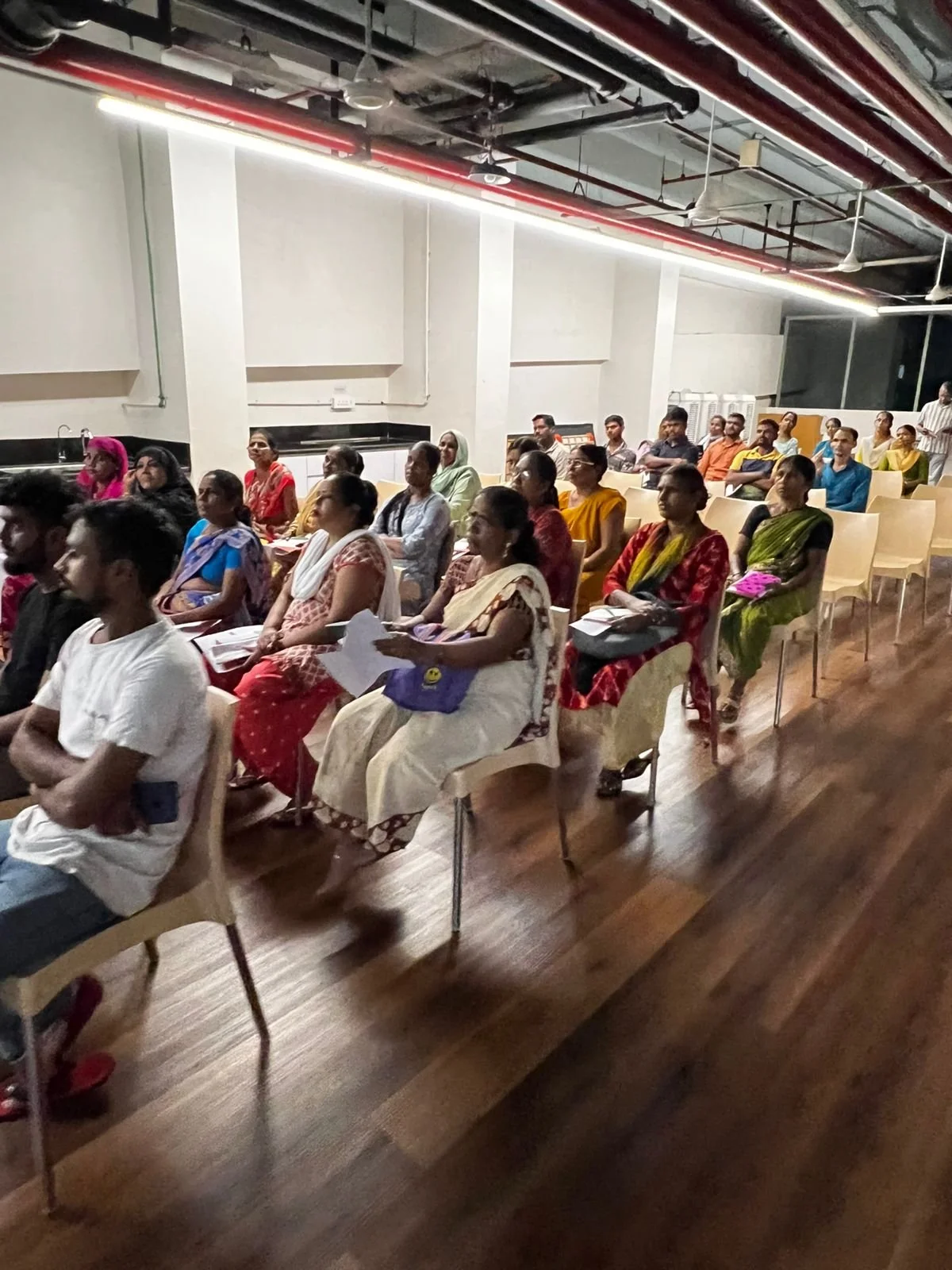
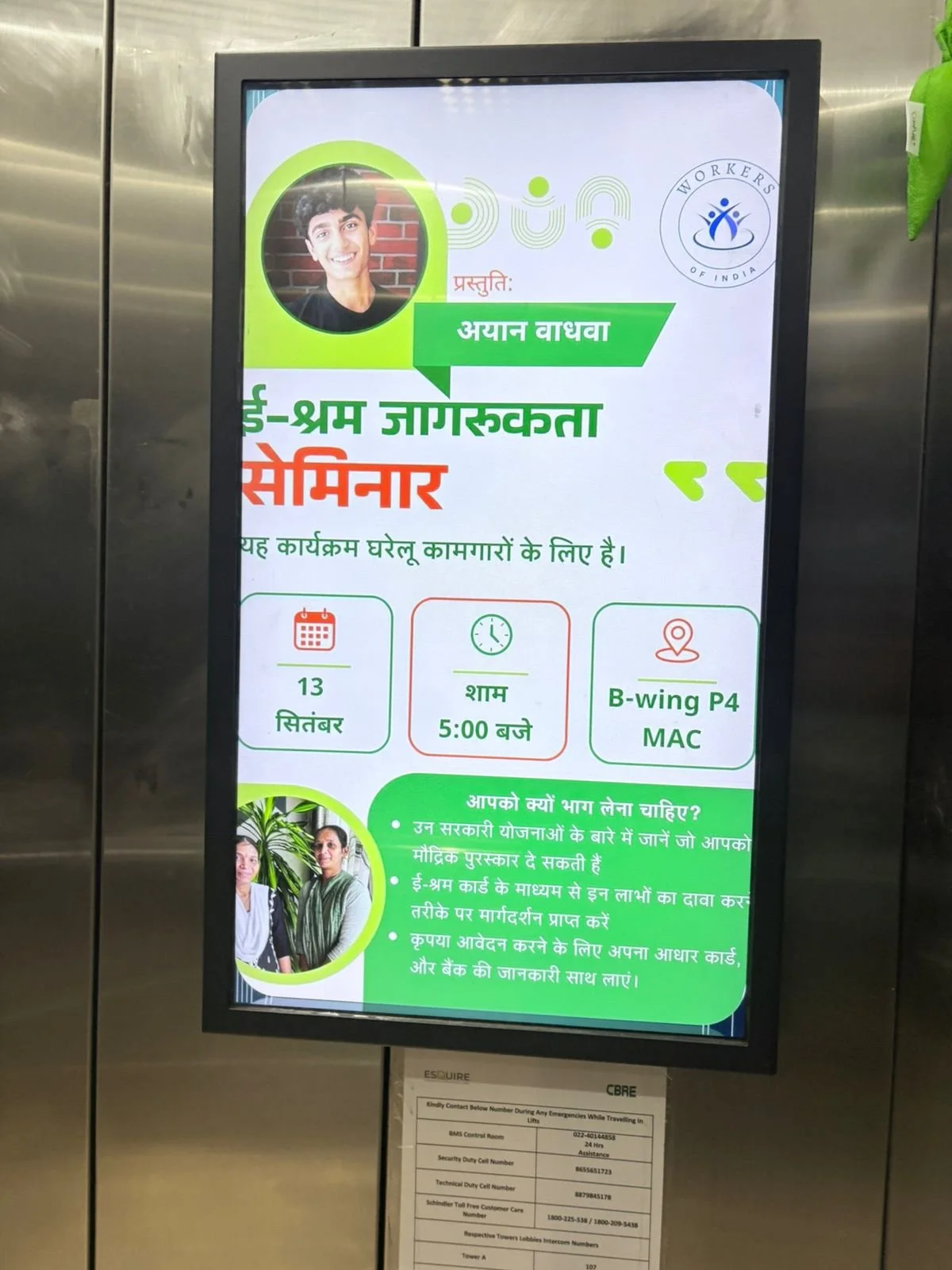




The first step…
If you have the power to speak up, use it to help those who cannot. It is not just a kind thing to do, it is something we should do.
If you have the power to speak up, use it to help those who cannot. It is not just a kind thing to do, it is something we should do.
There is a huge gap between how many of us live and how millions of workers in India’s unorganized sector struggle every day. These workers keep the country running, but they are often ignored when it comes to laws, safety, or support.
Over 90 percent of India’s workforce does not have stable jobs. Many live in constant worry, stuck in debt, with no safety net. That is just not right. Learning about their rights and understanding money can help, but knowledge alone will not fix everything.
That is why Workers of India was created. It is a platform that brings attention to these workers’ stories and stands up for their rights. The goal is simple: get them the respect, security, and legal recognition they deserve.
If you have a voice, use it. Talk about this. Share it. Help others learn. Real change needs more than just feeling bad. It needs action.
This website is just the first step. The real work starts now.